Qu'est-ce que Yarrow ?
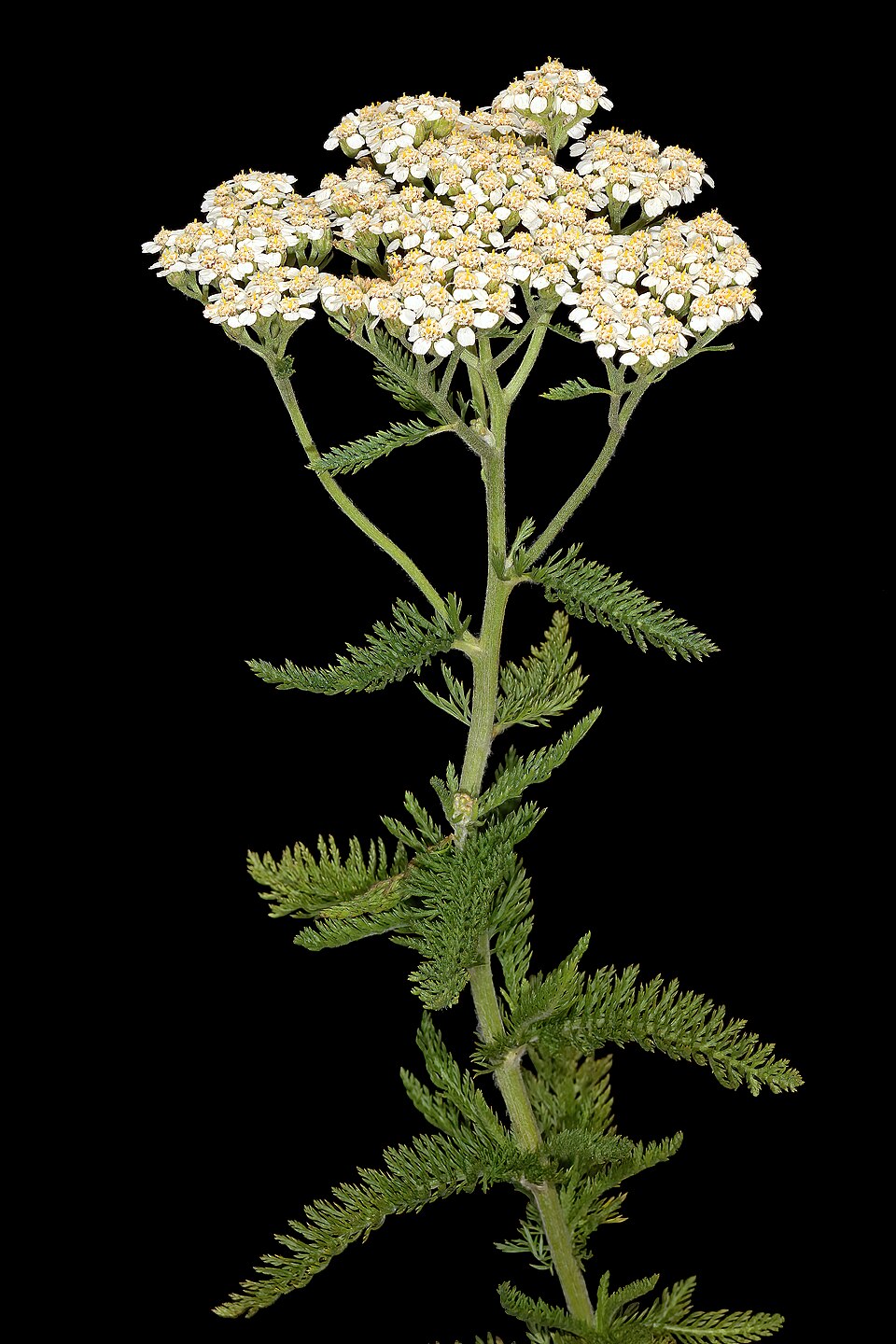
Yarrow is a hardy daisy-family plant found across the northern hemisphere, with finely divided, feather-like leaves (millefolium means "thousand leaves") and flat heads of tiny white or pink flowers. Legend says Achilles used it to staunch his soldiers' wounds, and its folk names — soldier's woundwort, staunchweed, nosebleed — tell the same story. It contains a bitter, aromatic mix of flavonoids, sesquiterpene lactones and volatile oil, which in some strains turns deep blue when distilled as chamazulene forms.
European regulators recognise yarrow as a traditional remedy for loss of appetite, mild cramping digestive complaints, minor menstrual cramps and small wounds. Those uses rest on long tradition and lab work showing anti-inflammatory and antispasmodic activity; good human trials are scarce.
Bienfaits et usages
Stimulates appetite and digestion
A classic bitter herb: its taste triggers digestive secretions. Traditionally drunk before meals for poor appetite, sluggish digestion and mild bloating.
Eases mild digestive cramps
Lab studies show yarrow relaxes smooth muscle, which fits its traditional use for griping stomach pains and wind. Human evidence is limited.
Menstrual cramps
A traditional remedy for period pain, often in sitz baths or teas, based on the same antispasmodic action. Evidence is largely traditional.
Minor cuts and scrapes
The ancient wound use. Crushed fresh leaves were pressed onto small cuts; the plant has mild astringent and antimicrobial activity in the lab. Clean, covered wounds and a plaster remain the sensible modern approach.
Anti-inflammatory activity
Extracts are anti-inflammatory in lab and animal studies, which is why yarrow appears in some skin creams. Whether this translates to meaningful effects in people is unproven.
Comment l'utiliser
Tea
1–2 tsp dried flowering tops per cup of just-boiled water, covered, 5–10 minutes. Distinctly bitter and aromatic. Drink 1 cup before meals, up to 3 times daily.
Bath
For menstrual cramps, steep a large handful of dried herb in a litre of hot water for 20 minutes, strain, and add to a warm bath or sitz bath.
Compress
Soak a cloth in cooled strong yarrow tea and apply to minor bruises or irritated skin.
Foraging with care
Yarrow's flat white flower heads resemble some highly poisonous carrot-family plants, such as hemlock. Only pick it if you are completely sure — the feathery, soft leaves and daisy-like tiny flowers are key features.
⚠️ Précautions
- Avoid in pregnancy: yarrow was traditionally used to bring on periods and may stimulate the uterus. Also avoid while breastfeeding, as safety has not been established.
- Daisy-family allergy: if you are allergic to ragweed, chamomile, chrysanthemums, marigolds or daisies, you may react to yarrow. Skin contact can also cause rashes in sensitive people.
- Blood thinners and sedatives: yarrow may theoretically affect blood clotting and add to sedation. Ask your pharmacist if you take anticoagulants or sedative medicines, and stop two weeks before surgery.
- It contains small amounts of thujone, which is toxic in large doses. Stick to tea amounts and do not use the concentrated essential oil internally.
- Rarely, it may make skin more sensitive to sunlight.
Ceci est une information générale, pas un avis médical. Consultez un professionnel de santé avant d'utiliser Yarrow pour traiter un trouble ou en association avec des médicaments.
Questions fréquentes
Does yarrow really stop bleeding?
It has mild astringent properties, and it was used this way for centuries. For anything more than a small scratch, use pressure, clean dressings and medical help.
Why is my yarrow oil blue?
Some yarrow strains produce chamazulene when distilled, which colours the oil deep blue — the same compound found in German chamomile oil.
Can I grow it?
Easily. Yarrow thrives in poor, dry soil and sun, and garden varieties come in yellows, pinks and reds. Use the white wild type for herbal purposes.
Commentaires