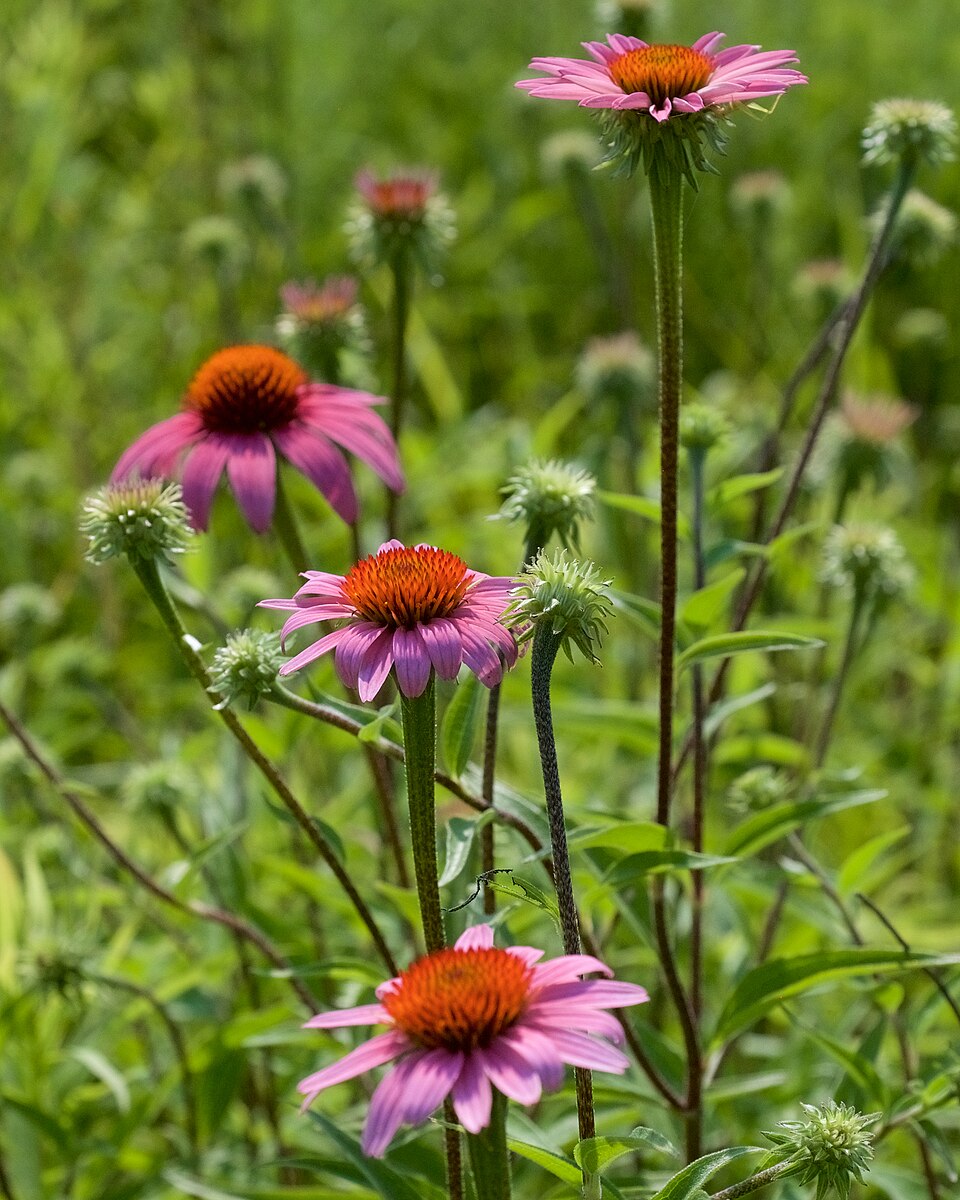
Was ist Echinacea?
Echinacea, the purple coneflower, is a prairie wildflower that Plains Indigenous nations used more widely than almost any other medicinal plant — for wounds, bites, sore throats and toothache. Early twentieth-century Europe adopted it enthusiastically, and it remains one of the best-selling herbal supplements for colds.
The modern evidence is genuinely mixed, and it's honest to say so: some trials and pooled analyses find a modest reduction in the chance of catching a cold and about a day shaved off symptoms; others find no effect. Product variability (species, plant part, extraction) explains much of the noise. It is not a proven cure — it is a "possibly, modestly helpful" herb with a long safety record in the short term.
Wirkung & Anwendungsgebiete
May reduce cold frequency and duration
Pooled analyses suggest a modest preventive effect (around 10–20% fewer colds) and roughly a day shorter illness when started at the first sniffle. Benefits are most consistent with alcohol-based E. purpurea extracts.
Traditional sore-throat and mouth remedy
Echinacea tincture's characteristic tongue-tingle comes from alkylamides; diluted as a gargle it is a traditional sore-throat treatment.
Skin-soothing tradition
Its original Indigenous uses centred on wounds, stings and skin infections; creams containing echinacea remain popular for minor blemishes.
Immune-modulating compounds
Alkylamides interact with the body's immune signalling (including cannabinoid receptors), giving a plausible mechanism for the modest clinical effects.
So wendest du sie an
At first symptoms
The evidence, such as it is, favours starting immediately when a cold begins — not once it's established. Typical regimen: tincture or tablets 3× daily for 7–10 days.
Tincture
Alcohol extracts of E. purpurea aerial parts (and/or root) are the best-studied form. Follow label dosing, commonly 2–3 ml three times daily. Expect the tongue-tingle — it's a marker of active alkylamides.
Tea
Pour boiling water over 1–2 tsp dried root/herb, steep covered 10–15 minutes, 2–3 cups daily during a cold. Milder than tincture.
Prevention
Some people take it through winter; trials used up to 4 months continuously. If you do, buy one reputable standardised product and stick to it.
⚠️ Vorsichtshinweise
- Daisy-family allergy (ragweed etc.) — echinacea can trigger reactions, occasionally serious ones.
- Autoimmune conditions or immunosuppressant therapy: avoid, since the herb's premise is immune stimulation.
- Not established as safe for long-term continuous use beyond a few months.
- Children: some countries advise against it under 12 due to rash risk; ask a paediatrician.
- Quality varies enormously between products — species and plant part genuinely matter.
Dies sind allgemeine Informationen, keine medizinische Beratung. Sprich mit medizinischem Fachpersonal, bevor du Echinacea zur Behandlung einer Erkrankung oder zusammen mit Medikamenten verwendest.
Häufige Fragen
Does echinacea actually work?
Honestly: maybe, modestly. The best reading of mixed trials is a small preventive effect and about a day off a cold's length — with a wide range of product quality muddying results. It is not a proven remedy.
Which species should I look for?
Echinacea purpurea is the most studied (aerial parts and root); E. angustifolia root is the traditional Plains species. Check the label names one of these.
Why does my tongue tingle?
Alkylamides — the compounds most linked to its immune activity. A strong tingle is generally a sign of a potent preparation.
Kommentare