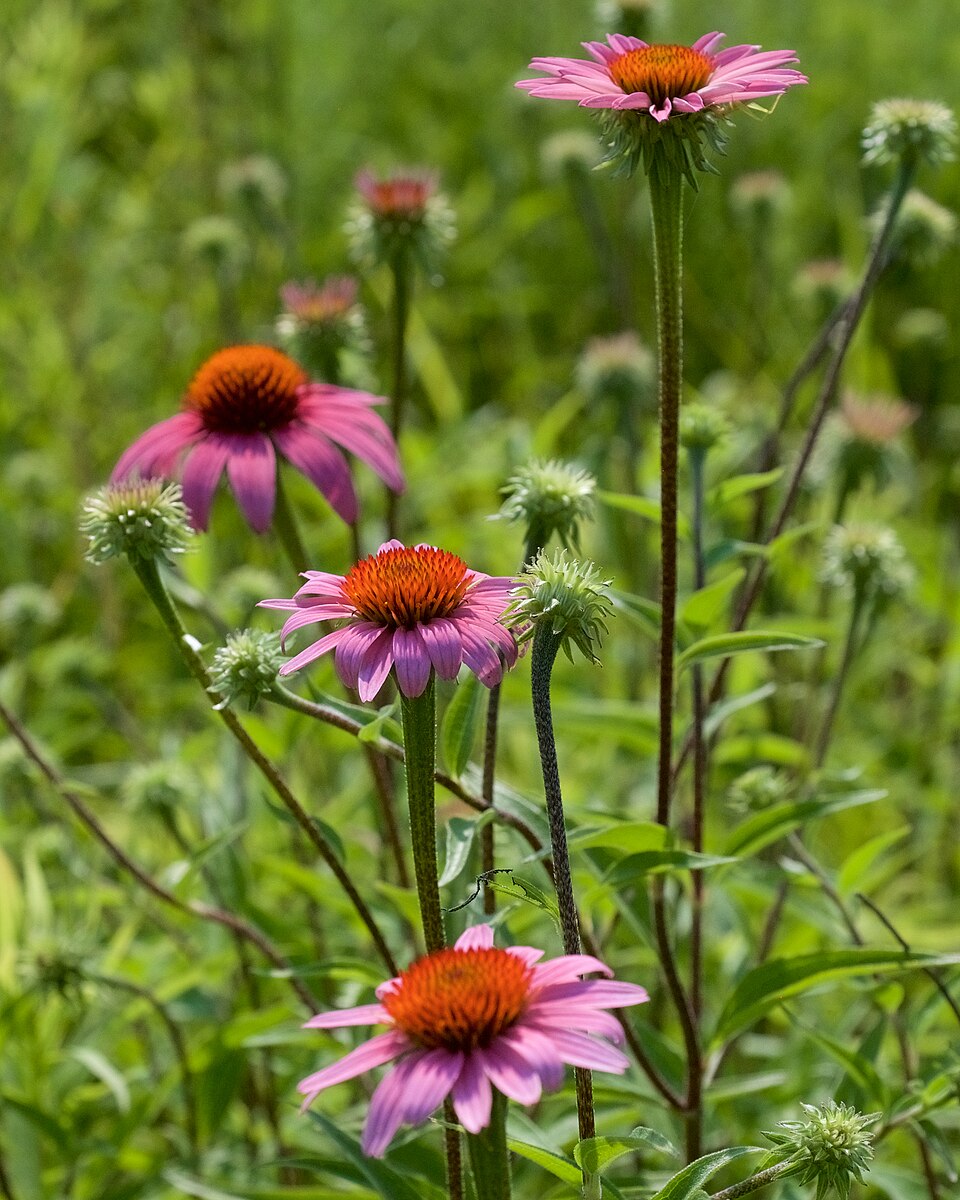
What is Echinacea?
Echinacea, the purple coneflower, is a prairie wildflower that Plains Indigenous nations used more widely than almost any other medicinal plant — for wounds, bites, sore throats and toothache. Early twentieth-century Europe adopted it enthusiastically, and it remains one of the best-selling herbal supplements for colds.
The modern evidence is genuinely mixed, and it's honest to say so: some trials and pooled analyses find a modest reduction in the chance of catching a cold and about a day shaved off symptoms; others find no effect. Product variability (species, plant part, extraction) explains much of the noise. It is not a proven cure — it is a "possibly, modestly helpful" herb with a long safety record in the short term.
Benefits & uses
May reduce cold frequency and duration
Pooled analyses suggest a modest preventive effect (around 10–20% fewer colds) and roughly a day shorter illness when started at the first sniffle. Benefits are most consistent with alcohol-based E. purpurea extracts.
Traditional sore-throat and mouth remedy
Echinacea tincture's characteristic tongue-tingle comes from alkylamides; diluted as a gargle it is a traditional sore-throat treatment.
Skin-soothing tradition
Its original Indigenous uses centred on wounds, stings and skin infections; creams containing echinacea remain popular for minor blemishes.
Immune-modulating compounds
Alkylamides interact with the body's immune signalling (including cannabinoid receptors), giving a plausible mechanism for the modest clinical effects.
How to use it
At first symptoms
The evidence, such as it is, favours starting immediately when a cold begins — not once it's established. Typical regimen: tincture or tablets 3× daily for 7–10 days.
Tincture
Alcohol extracts of E. purpurea aerial parts (and/or root) are the best-studied form. Follow label dosing, commonly 2–3 ml three times daily. Expect the tongue-tingle — it's a marker of active alkylamides.
Tea
Pour boiling water over 1–2 tsp dried root/herb, steep covered 10–15 minutes, 2–3 cups daily during a cold. Milder than tincture.
Prevention
Some people take it through winter; trials used up to 4 months continuously. If you do, buy one reputable standardised product and stick to it.
⚠️ Precautions
- Daisy-family allergy (ragweed etc.) — echinacea can trigger reactions, occasionally serious ones.
- Autoimmune conditions or immunosuppressant therapy: avoid, since the herb's premise is immune stimulation.
- Not established as safe for long-term continuous use beyond a few months.
- Children: some countries advise against it under 12 due to rash risk; ask a paediatrician.
- Quality varies enormously between products — species and plant part genuinely matter.
This is general information, not medical advice — check with a health professional before using Echinacea to treat a condition or alongside medication.
Frequently asked questions
Does echinacea actually work?
Honestly: maybe, modestly. The best reading of mixed trials is a small preventive effect and about a day off a cold's length — with a wide range of product quality muddying results. It is not a proven remedy.
Which species should I look for?
Echinacea purpurea is the most studied (aerial parts and root); E. angustifolia root is the traditional Plains species. Check the label names one of these.
Why does my tongue tingle?
Alkylamides — the compounds most linked to its immune activity. A strong tingle is generally a sign of a potent preparation.
Comments