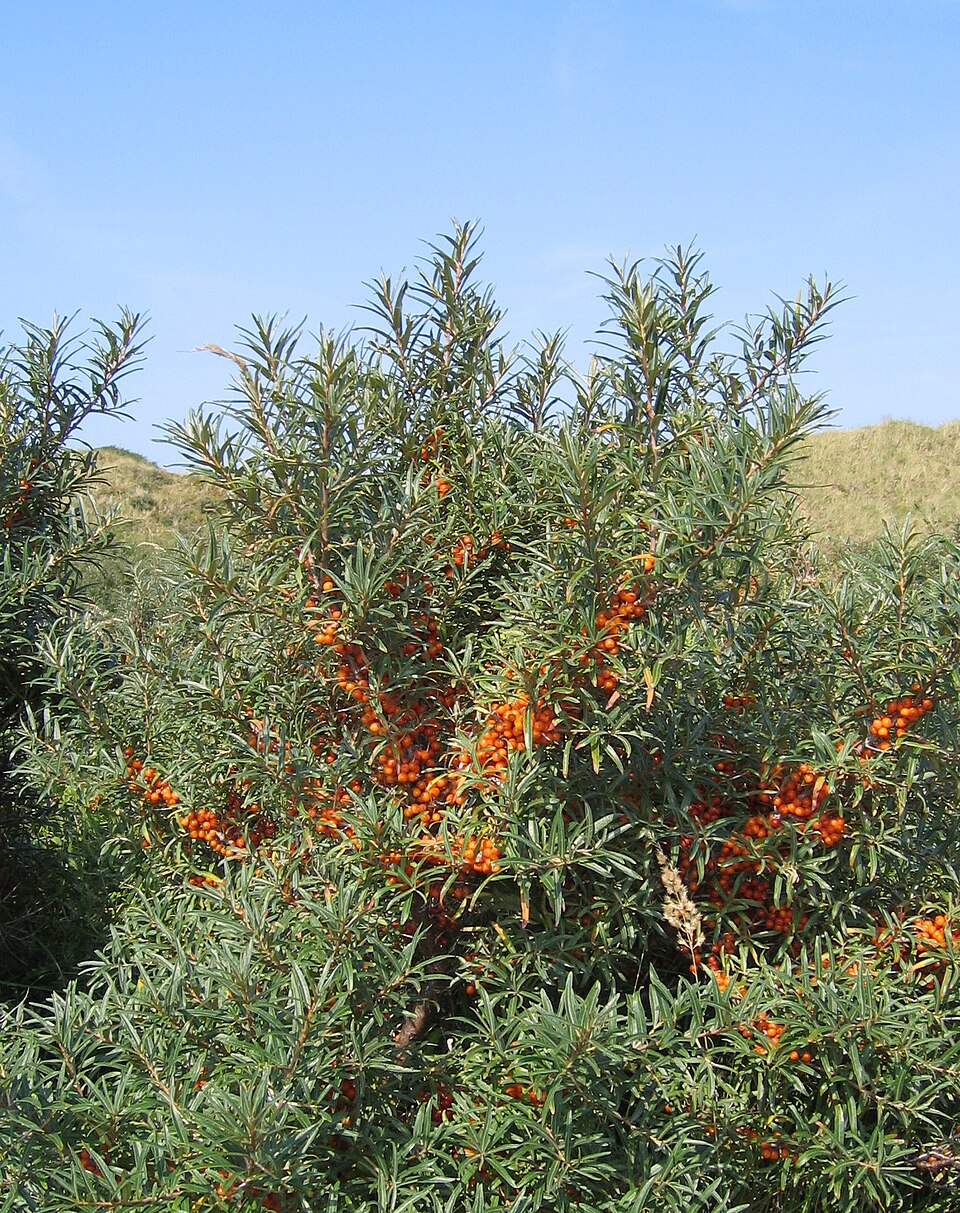
Was ist Sea Buckthorn?
Sea buckthorn is a tough, silvery-leaved, thorny shrub that grows on sand dunes, riverbanks and mountain slopes from the coasts of Britain and the Baltic to the Himalayas and Mongolia. Its bright orange berries cling tightly to the branches and are intensely sour. They are exceptionally rich in vitamin C, carotenoids and vitamin E, and their oils are unusual for containing large amounts of palmitoleic acid (omega-7). It has been used in Tibetan and Mongolian medicine for centuries, and Soviet researchers studied the oil for burns and radiation injuries.
Modern human evidence is modest. Small randomised trials suggest oral sea buckthorn oil may ease dry eye symptoms, and it has been studied for dry skin, eczema and mucous membrane dryness, with encouraging but preliminary results. Much of the rest — heart, liver and anti-inflammatory benefits — comes from lab and animal studies.
Wirkung & Anwendungsgebiete
May ease dry eyes
In a placebo-controlled trial, taking sea buckthorn oil capsules for three months reduced redness and burning in people with dry eyes, especially contact-lens wearers. One trial is not proof, but it is a reasonable thing to try.
Skin support
The oil is used in creams for dry, irritated or damaged skin, and small studies in eczema (atopic dermatitis) found modest improvement from oral pulp oil. Evidence is limited.
Mucous membrane dryness
Omega-7 oil has been studied for dryness of mucous membranes; a small trial in postmenopausal women found oral sea buckthorn oil improved vaginal tissue health.
Rich in vitamin C and antioxidants
The berries contain more vitamin C than oranges, alongside carotenoids, vitamin E and flavonoids — a nourishing addition to the diet.
Heart and metabolic markers
Small trials found the berries or their extracts had modest effects on cholesterol or post-meal blood sugar in some people. Results are inconsistent and need confirmation.
So wendest du sie an
Juice
Sea buckthorn juice is popular in Finland, Germany and Russia. It is very sour and tart; drink 30–50 ml diluted with water or blended with sweeter fruit juice.
Oil capsules
Trials for dry eye and skin used 2–3 g of oil daily for 1–3 months. Choose a product that states whether it is seed oil, pulp oil or a blend, as they differ in omega-7 content.
Topical oil
Pulp oil is intensely orange and can stain skin, clothing and towels. Dilute a few drops in a carrier oil or cream before applying to dry patches; patch test first.
In the kitchen
Use berries or purée in jams, jellies, sauces for game and fish, or in smoothies. Freezing the branches makes it easier to knock off the berries.
⚠️ Vorsichtshinweise
- Blood thinners: sea buckthorn may slow blood clotting in lab studies, so be cautious with warfarin, aspirin or other antiplatelet drugs and stop supplements two weeks before surgery.
- Medication for blood pressure and diabetes: extracts may lower both, adding to the effects of these drugs. Monitor if you take them.
- Pregnancy and breastfeeding: the berries as food are considered safe, but supplement doses lack safety data — avoid them unless your doctor agrees.
- Allergy: reactions are rare, but people sensitive to other berries or plant oils should start with a small amount. Topical oil may irritate sensitive skin.
- Large doses of oil can cause stomach upset or diarrhoea, and high carotenoid intake may temporarily tint skin orange. There is no known serious overdose risk at normal amounts.
Dies sind allgemeine Informationen, keine medizinische Beratung. Sprich mit medizinischem Fachpersonal, bevor du Sea Buckthorn zur Behandlung einer Erkrankung oder zusammen mit Medikamenten verwendest.
Häufige Fragen
What does sea buckthorn taste like?
Very sour and tangy, with a hint of pineapple and passion fruit and a slightly bitter aftertaste. Most people prefer it sweetened or mixed.
What is omega-7?
Palmitoleic acid, a fatty acid that is rare in plants but abundant in sea buckthorn pulp oil and macadamia nuts. It is a normal part of human skin fat, which is one reason it is studied for skin and mucous membranes.
Can I grow sea buckthorn?
Yes — it tolerates poor, salty and sandy soil. You need both a male and a female plant for berries. Plant it where the thorns and suckers will not be a nuisance.
Kommentare