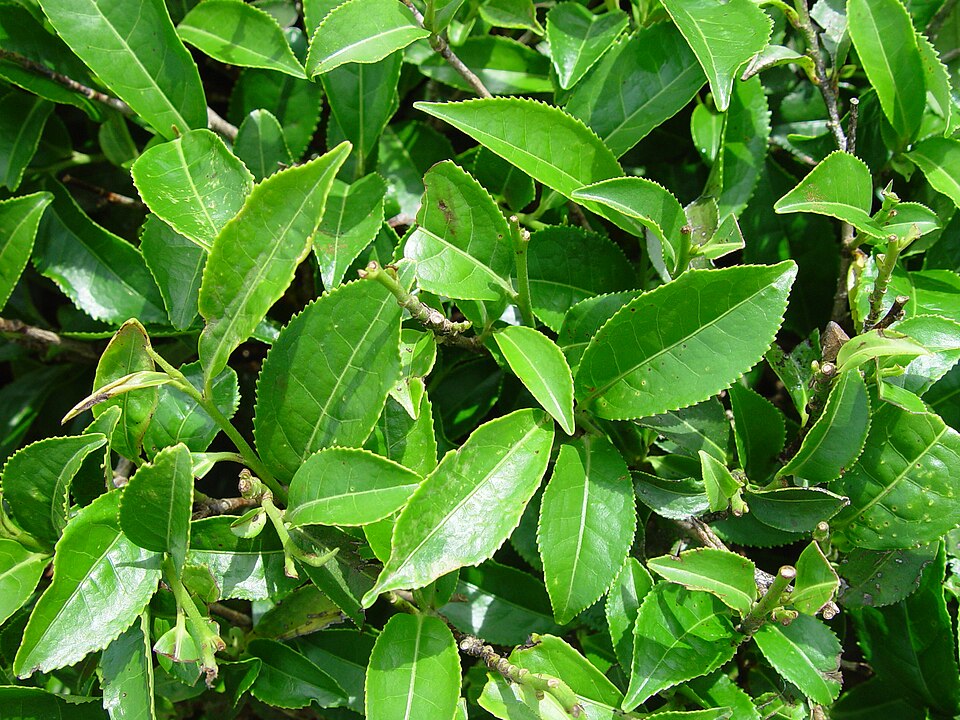
Was ist Green Tea?
All true tea comes from one plant, Camellia sinensis; green tea is simply the leaf heated quickly after picking so it never oxidises, preserving its grassy character and its catechins — above all EGCG, one of the most studied plant polyphenols in existence.
Green tea's signature is the pairing of moderate caffeine with L-theanine, an amino acid that promotes relaxed alertness; together they produce focus without the jitters of coffee. Large population studies associate habitual green-tea drinking with better cardiovascular outcomes, and trials show modest benefits for blood pressure and LDL cholesterol.
Wirkung & Anwendungsgebiete
Calm, sustained focus
Caffeine (~30–50 mg per cup) plus L-theanine measurably improves attention in trials while smoothing caffeine's edge — the reason green tea feels different from coffee.
Heart-friendly habit
Meta-analyses of trials show small reductions in blood pressure and LDL cholesterol; long-term drinkers in cohort studies show lower cardiovascular risk (association, not proof).
Rich in antioxidants
EGCG and fellow catechins are potent free-radical scavengers, best obtained the traditional way — as brewed tea, several cups a day.
Supports healthy metabolism
Catechin–caffeine combinations produce small, real increases in energy expenditure, though the effect on body weight is modest at realistic intakes.
Oral health
Catechins suppress plaque bacteria; unsweetened green tea is one of the most tooth-friendly drinks there is.
So wendest du sie an
Brew it properly
Water at 70–80 °C — not boiling, which scalds the leaf bitter. 1 tsp leaf (or one bag) per cup, 1–3 minutes. Good leaves re-steep 2–3 times.
How much
The intakes associated with benefits in population studies are 3–5 cups a day. Start lower if caffeine-sensitive, and keep it to mornings/afternoons.
Matcha
Powdered whole leaf, whisked into water — you consume the entire leaf, so expect roughly triple the catechins and caffeine of a brewed cup. One or two servings daily is plenty.
Iced or cold-brewed
Steep leaves in cold water 2–4 hours in the fridge: sweeter, less bitter, lower caffeine, catechins largely retained.
⚠️ Vorsichtshinweise
- It contains caffeine: moderate intake late in the day can disturb sleep; pregnancy guidance caps total caffeine at 200 mg/day (green tea fits, counted carefully).
- High-dose green tea EXTRACT supplements (not the drink) have been linked to rare liver injury — prefer the beverage; if you use extracts, take with food and stop if unwell.
- Tea tannins reduce iron absorption — drink it between meals, not with them, if you're iron-deficient.
- Green tea's vitamin K and catechins can interact with warfarin; keep intake consistent and tell your doctor.
Dies sind allgemeine Informationen, keine medizinische Beratung. Sprich mit medizinischem Fachpersonal, bevor du Green Tea zur Behandlung einer Erkrankung oder zusammen mit Medikamenten verwendest.
Häufige Fragen
Green vs black tea — which is healthier?
Both are genuinely healthy; green preserves more catechins, black develops theaflavins with overlapping benefits. The best tea is the one you'll actually drink daily, unsweetened.
Why does my green tea taste bitter?
Water too hot or steeped too long. Try 75 °C and 2 minutes — properly brewed green tea is sweet-grassy, not harsh.
Is matcha better than regular green tea?
More concentrated, not magically different. Whole-leaf consumption means more of everything, caffeine included.
Kommentare