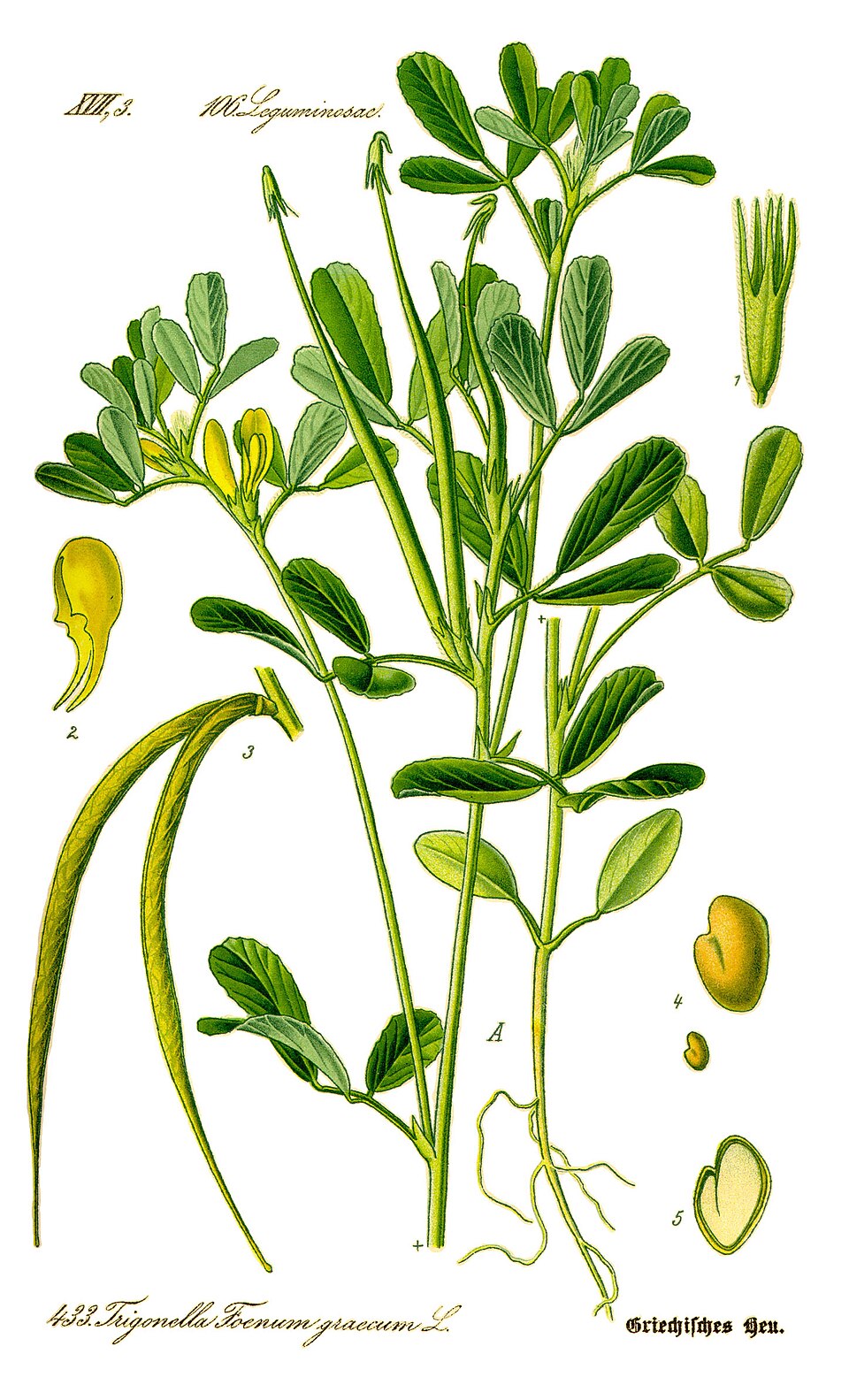
¿Qué es Fenugreek?
Fenugreek is a clover-family legume whose hard amber seeds smell of maple syrup (the same molecule, sotolon, is used in artificial syrup). It's foundational in Indian, Persian and Egyptian cooking — seeds in curry powders and pickles, fresh leaves (methi) as a vegetable — and appears in the Ebers Papyrus, one of medicine's oldest documents.
It's among the better-studied kitchen medicinals: the seeds' viscous galactomannan fibre plus the amino acid 4-hydroxyisoleucine slow carbohydrate absorption and support insulin action, with meta-analyses showing meaningful fasting-glucose and cholesterol reductions in diabetics at food-sized doses (5–25 g/day). It's also the West's most-used herbal galactagogue (milk-supply herb), with mixed but leaning-positive trial results.
Beneficios y usos
Supports blood sugar control
Pooled trials in type 2 diabetes: 5–25 g of seed daily (whole, soaked or powdered, with meals) lowered fasting glucose and HbA1c modestly. The gel-forming fibre is a big part of the mechanism, so it works best taken with food.
Lowers cholesterol modestly
The same soluble fibre binds bile acids: trials show total and LDL cholesterol reductions of roughly 10%.
Traditional milk-supply herb
The most-used galactagogue in Western lactation practice; trials are mixed but several show increased milk volume in the early weeks. Involve a lactation consultant — supply issues usually have mechanical causes first.
May support testosterone/libido
A few industry-funded trials of standardised extracts found improved libido and mild testosterone increases in men; interesting, not yet convincing.
Digestive soothing
The mucilage coats and soothes; soaked seeds are a traditional remedy for heartburn and constipation alike.
Cómo usarla
Soaked seeds
The classic therapeutic form: soak 1–2 tsp overnight in water, chew the softened seeds (bitter!) and drink the water before breakfast — or blitz into a smoothie to hide the bitterness.
In cooking
Dry-roast seeds briefly (gets nutty, less bitter — don't scorch or they turn acrid) for curries, pickles and spice blends; fresh or dried methi leaves into dals, flatbreads and potato dishes.
Powder with meals
2–5 g of seed powder stirred into yogurt or sprinkled on food, 1–2× daily with carbohydrate-containing meals for the glucose effect.
Lactation tea/capsules
Typical regimens: 1–2 g capsules three times daily, or 2–3 cups of fenugreek tea; effect, if it comes, shows within 3 days. Baby smelling faintly of maple syrup = the known harmless quirk.
⚠️ Precauciones
- AVOID during pregnancy in medicinal doses — fenugreek is uterine-stimulating (its use starts after birth, not before).
- It can genuinely lower blood sugar: combine carefully with diabetes medication and monitor.
- Peanut/chickpea/legume allergy can cross-react.
- The maple odour in sweat and urine is harmless but real; in newborns it can mimic the smell of a rare metabolic disease (MSUD) — tell your paediatrician you're taking it.
- Big fibre doses can cause bloating and reduce absorption of medications taken simultaneously — separate other drugs by 2 hours.
Esta es información general, no consejo médico. Consulta a un profesional de la salud antes de usar Fenugreek para tratar una afección o junto con medicamentos.
Preguntas frecuentes
Does fenugreek really boost milk supply?
Evidence is mixed; many lactation consultants see it help some mothers, do nothing for others. Rule out latch/frequency issues first, try it for 3–5 days, and drop it if nothing changes.
How do I make the seeds less bitter?
Soak overnight (also activates the useful mucilage), or dry-roast gently before grinding. Sprouting them is the mildest form of all.
Whole seeds, powder or extract?
For glucose/cholesterol, food-form (soaked/powder with meals) matches the studies. Extracts are mostly used in the libido/testosterone research.
Comentarios