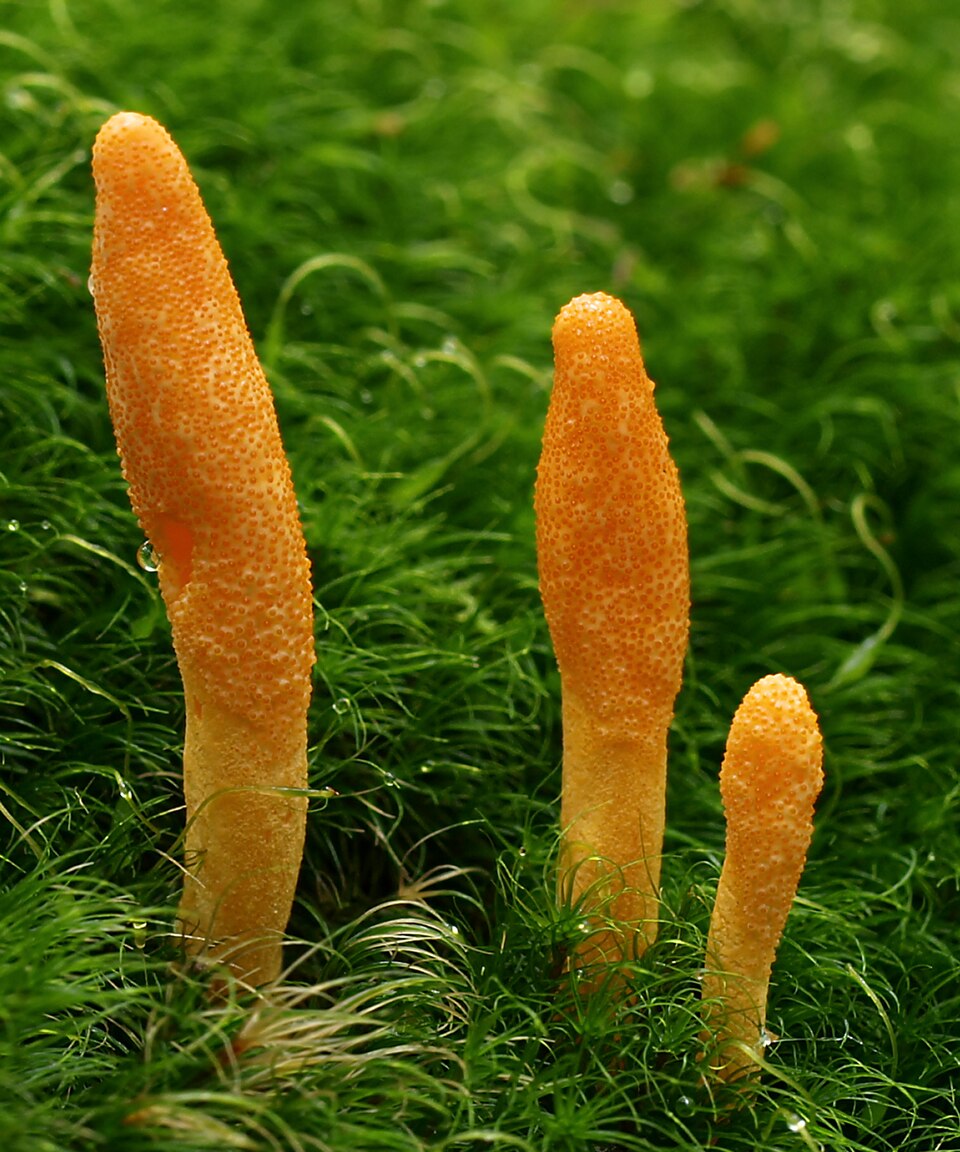
Qu'est-ce que Cordyceps ?
Cordyceps is a fungus, not a plant, and a strange one. The wild Himalayan species, Ophiocordyceps sinensis, infects ghost moth caterpillars underground and sends a slender stalk up through the soil. Prized in Tibetan and Chinese medicine as a tonic for energy, lungs and kidneys, it is now so scarce and expensive that it can cost more than its weight in silver — and wild material has been found adulterated or contaminated with heavy metals. Almost all supplements today use either cultivated Cordyceps militaris, grown on grain or rice, or fermented mycelium strains such as Cs-4.
Cordyceps became famous after reports linked it to Chinese runners' record-breaking performances in the 1990s, but those claims were never substantiated. Small human trials of cultivated products show modest and inconsistent effects on exercise capacity, with some benefit in older or untrained adults and little in trained athletes. Its active compounds include cordycepin (especially in C. militaris), adenosine and polysaccharides.
Bienfaits et usages
Modest help with exercise capacity
A few small placebo-controlled trials found cordyceps modestly improved measures like oxygen uptake or time to exhaustion, mainly in older or less-fit adults. Studies in trained athletes largely found no benefit.
Energy and fatigue tradition
Used for centuries in Tibetan and Chinese medicine for tiredness and weakness after illness. Modern evidence for fatigue is limited to small studies.
Lung and breathing tradition
Traditionally given for coughs and breathlessness, and studied in China for chronic lung conditions. Evidence is low quality, and it is not a substitute for inhalers or medical treatment.
Blood sugar and kidney interest
Animal studies and some Chinese clinical studies suggest effects on blood sugar and kidney function. These results need confirmation in well-designed trials.
Cordycepin in the lab
Cordycepin, abundant in C. militaris, has anti-inflammatory and other effects in cell and animal studies. It is an active research compound, not a proven treatment.
Comment l'utiliser
Capsules or powder
Trials commonly used 1–3 g daily of cultivated cordyceps extract or mycelium. Take it with breakfast, and give it several weeks before judging.
Choose cultivated products
Cultivated C. militaris fruiting bodies or Cs-4 mycelium are more affordable, sustainable and consistent than wild cordyceps, and avoid the contamination problems of wild material.
Tea or soup
Dried C. militaris stalks (orange strands) can be simmered in water for 15–20 minutes, or added to soups and broths, as is common in Chinese cooking.
In drinks
Stir powder into coffee, smoothies or pre-workout drinks. It has a mild, slightly savoury taste.
⚠️ Précautions
- Bleeding risk: cordyceps may slow blood clotting. Avoid with warfarin, aspirin or other blood thinners and in bleeding disorders, and stop at least two weeks before surgery.
- Immune conditions: because it may stimulate the immune system, avoid it with autoimmune diseases (such as lupus or rheumatoid arthritis) or if you take immunosuppressants, including after an organ transplant.
- Diabetes medicines: it may lower blood sugar, so monitor your levels if you combine it with diabetes treatment.
- Pregnancy and breastfeeding: avoid — there is no safety data.
- Wild cordyceps has been found contaminated with lead and arsenic. Buy tested, cultivated products from reputable brands.
- Side effects are usually mild: stomach upset, dry mouth or nausea. Avoid if you are allergic to mushrooms or moulds.
Ceci est une information générale, pas un avis médical. Consultez un professionnel de santé avant d'utiliser Cordyceps pour traiter un trouble ou en association avec des médicaments.
Questions fréquentes
Will cordyceps improve my athletic performance?
Probably not by much if you are already fit. Small studies show modest effects at best, mostly in older or untrained people.
Is wild cordyceps better than cultivated?
Not necessarily. Wild cordyceps is costly, often contaminated or fake, and overharvested. Cultivated products are more consistent and are what most research has used.
Does it really grow out of caterpillars?
The wild Himalayan species does. Cultivated C. militaris for supplements is usually grown on grain or rice, so no caterpillars are involved.
Commentaires