Qu'est-ce que Hawthorn ?
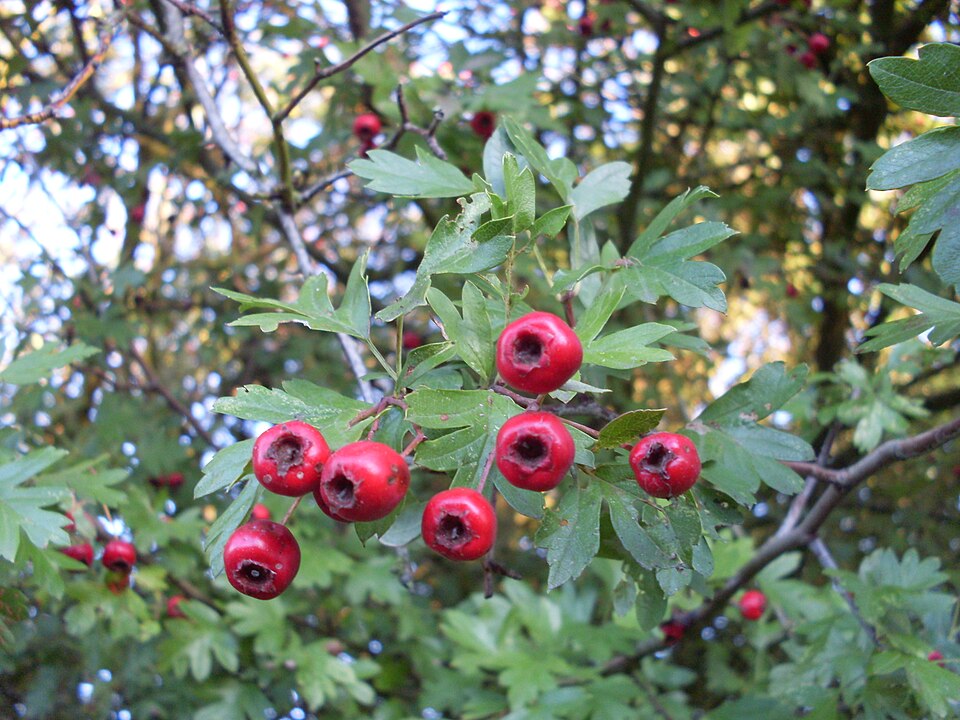
Hawthorn is the thorny small tree of European hedgerows, smothered in white "May blossom" in spring and bright red berries (haws) in autumn. Both common species, Crataegus monogyna and C. laevigata, are used interchangeably. In folklore it guarded fairy places; in herbal medicine it had older uses, but became a popular heart remedy in the late 19th century. Its leaves, flowers and berries are rich in flavonoids and oligomeric procyanidins (OPCs).
The main modern research has been on standardised leaf-and-flower extracts in mild heart failure. Earlier trials suggested better exercise tolerance and fewer symptoms, but a large trial found no reduction in serious heart events. Small studies suggest a slight lowering of blood pressure. Because heart conditions are serious and hawthorn interacts with heart medicines, it should only be used alongside, not instead of, medical care.
Bienfaits et usages
Symptoms in mild heart failure
Several placebo-controlled trials of leaf-and-flower extract, taken as an add-on to standard medicines, reported modest improvements in exercise capacity, breathlessness and fatigue. A larger long-term trial did not show fewer hospital admissions or deaths, so the benefit is mainly on symptoms, if at all.
Slight blood pressure lowering
A few small trials found hawthorn extract lowered blood pressure a little in people with mild hypertension. It is not a replacement for blood pressure medication.
Supports blood vessel function
Lab and animal studies suggest hawthorn flavonoids help blood vessels relax and protect heart muscle from oxidative stress. Human evidence for these effects is still limited.
Traditional calming heart tea
Herbalists use hawthorn for "nervous heart" — palpitations linked to stress — often with lemon balm or motherwort. This is traditional use; any new palpitations should be checked by a doctor first.
Antioxidant-rich berries
Haws are packed with polyphenols and have long been made into jellies, fruit leathers and, in China (from related species), sweet snacks.
Comment l'utiliser
Standardised extract
The trialled form: leaf-and-flower extract standardised to OPCs or flavonoids, commonly 300–900 mg daily in two or three doses. Effects build over 6–12 weeks. Only use this with your doctor's agreement if you have a heart condition.
Tea
1–2 tsp dried leaf and flower per cup, covered, 10–15 minutes. Mild and slightly astringent; 2–3 cups daily. Blends well with lemon balm or lime (linden) flower.
Berry tincture or syrup
Tincture of the berries is usually taken at 1–2 ml up to three times daily. Berries can also be simmered into a syrup or jelly — remove the seeds.
Foraging
Pick flowers in late spring and haws when deep red in autumn, away from busy roads. Dry flowers quickly in the shade; the fresh berry pulp is mealy but edible cooked.
⚠️ Précautions
- Talk to your doctor first if you have any heart condition. Hawthorn may add to the effects of heart medicines, including digoxin, beta-blockers, calcium channel blockers, nitrates and other blood pressure drugs, which could cause low blood pressure or dizziness.
- Avoid in pregnancy and breastfeeding — there is not enough safety information.
- Chest pain, new palpitations, breathlessness or swelling of the ankles need prompt medical assessment, not self-treatment with herbs.
- Side effects are usually mild: dizziness, nausea, headache or digestive upset. Stop it before surgery and tell your anaesthetist, as it may affect blood pressure.
- Don't eat the seeds: like apple pips they contain small amounts of cyanide-releasing compounds. The flesh of cooked berries is safe in food amounts.
- Allergies are rare; people allergic to other rose-family plants (apple, cherry, rose) should try it cautiously.
Ceci est une information générale, pas un avis médical. Consultez un professionnel de santé avant d'utiliser Hawthorn pour traiter un trouble ou en association avec des médicaments.
Questions fréquentes
Can hawthorn replace my blood pressure tablets?
No. Its blood-pressure effect in trials is small, and stopping prescribed medication can be dangerous. If you want to try it, do so with your doctor's knowledge alongside your treatment.
Which part should I use — flowers or berries?
Most modern research used leaf-and-flower extracts; berries are the more traditional form in North America and in cooking. Both contain similar families of flavonoids.
Why is it called "May"?
Because it flowers in May in Britain. The old saying "ne'er cast a clout till May be out" may refer to the blossom rather than the month.
Commentaires