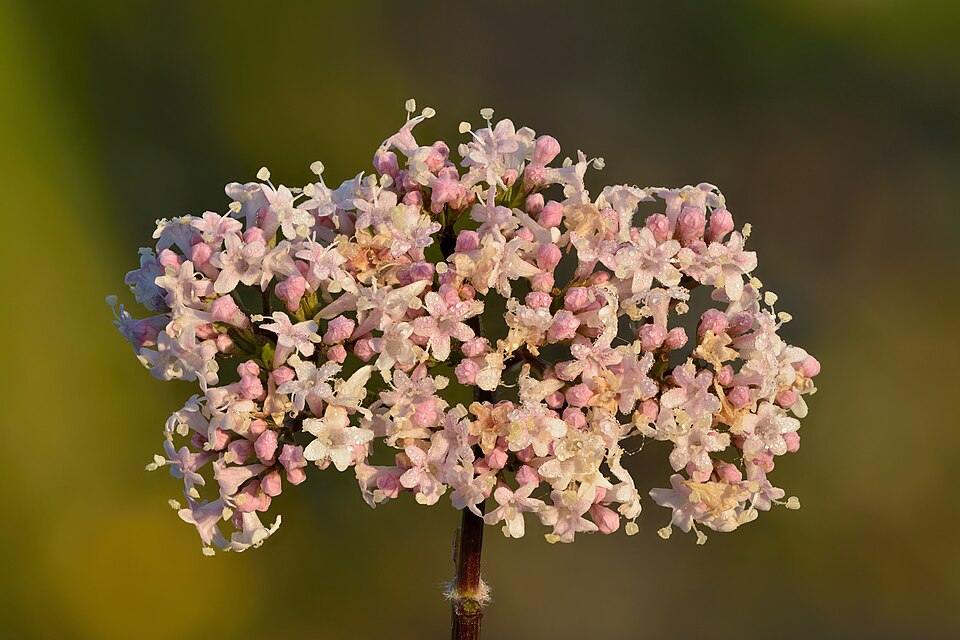
Qu'est-ce que Valerian ?
Valerian is a tall pink-flowered meadow plant whose root has been prescribed for "nervous unrest" since Hippocrates and Galen. The fresh root smells famously terrible — like old socks, thanks to isovaleric acid — which cats, incidentally, adore roughly as much as catnip.
It is Europe's classic herbal sleep aid. Trial results are mixed in the way honest herbal evidence usually is: many studies show modestly faster sleep onset and better self-rated sleep quality, others show little; effects build over 1–2 weeks rather than knocking you out on night one. Its valerenic acid interacts with the brain's GABA system, the same system targeted (far more forcefully) by sleeping pills.
Bienfaits et usages
Eases the way into sleep
The best-supported use: 300–600 mg of root extract 30–60 minutes before bed modestly improved sleep quality and onset in multiple trials, without next-day grogginess or dependence.
Calms restlessness
Traditional and modern use for "tired but wired" states; often combined with lemon balm or hops in calming blends.
May ease anxiety-related tension
Small trials and long tradition; gentler than prescription anxiolytics, and unsuitable as a replacement for them in real anxiety disorders.
Menstrual and muscle cramp tradition
The name likely stems from Latin valere, "to be strong/well"; antispasmodic use for cramps dates back centuries, with a couple of supportive small trials.
Comment l'utiliser
Extract capsules
The evidence-backed route: 300–600 mg standardised root extract, 30–60 minutes before bed, nightly for at least two weeks before judging.
Tea
1–2 tsp dried root per cup, simmered gently or steeped covered 10–15 minutes. Earthy and frankly pungent — honey and lemon balm help. 1 cup before bed.
Tincture
1–2 ml in a little water before bed; faster to take than tea, same timeline of effect.
Blends
Valerian + lemon balm or valerian + hops are the traditional (and trialled) sleep pairings; look for those combinations in ready-made night teas.
⚠️ Précautions
- Don't combine with alcohol, sleeping pills, benzodiazepines or other sedatives — effects add up.
- Causes next-morning drowsiness in a minority; try it first on a night when you don't drive early.
- A small number of people react paradoxically — stimulated instead of sedated. If that's you, valerian isn't your herb.
- Not recommended in pregnancy/breastfeeding or for children without medical advice — safety data is thin.
- Stop two weeks before surgery (anaesthesia interaction).
Ceci est une information générale, pas un avis médical. Consultez un professionnel de santé avant d'utiliser Valerian pour traiter un trouble ou en association avec des médicaments.
Questions fréquentes
Why doesn't it work like a sleeping pill?
Because it isn't one. Valerian nudges the GABA system gently; trials show benefits accumulating over 1–2 weeks of nightly use. If you want night-one sedation, you'll be disappointed — that's also why it isn't habit-forming.
Is the smell a quality problem?
No — the reverse. A strong "old sock" smell means the volatile acids are intact. Odourless valerian root is stale valerian root.
Can I take it long-term?
Studies up to about 6 weeks show good tolerability; longer-term data is limited. Many users cycle it, or reserve it for bad patches.
Commentaires