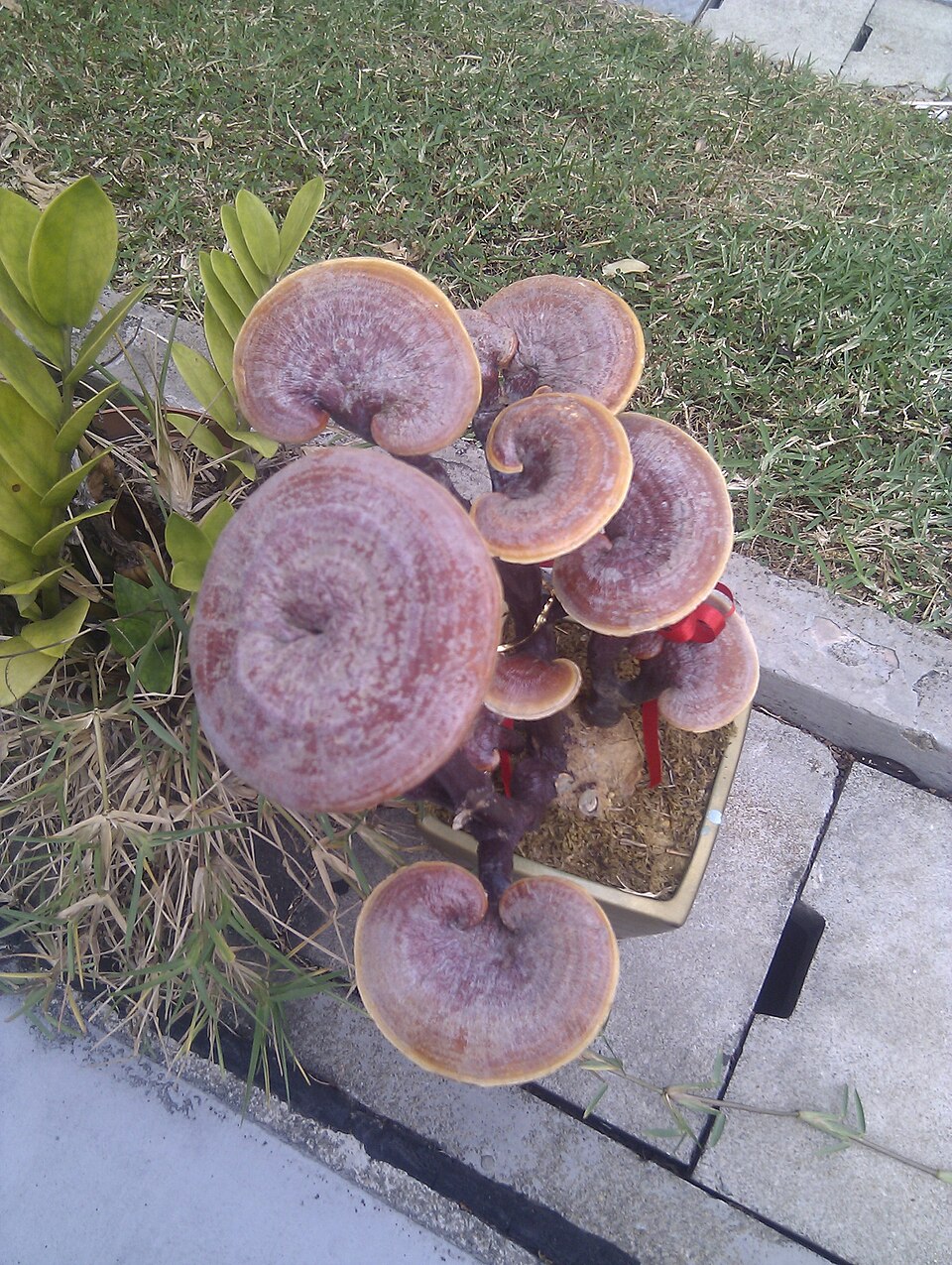
What is Reishi?
Reishi (lingzhi in Chinese) is a fungus, not a plant: a hard, shiny, reddish-brown bracket that grows on hardwood logs. Too woody and bitter to eat, it has been prized in Chinese and Japanese medicine for some two thousand years as a tonic for long life, calm and vitality, and appears in imperial art as a symbol of good fortune. Many products are still labelled Ganoderma lucidum, a name that strictly belongs to a closely related European species. Its main compounds are bitter triterpenes (ganoderic acids) and immune-active polysaccharides called beta-glucans.
The modern evidence is modest. Lab and animal studies show immune-modulating and anti-inflammatory effects, but human trials are few, small and mixed. Systematic reviews found no clear benefit for blood pressure, cholesterol or blood sugar, and although reishi has been studied alongside cancer care in Asia, it is not a cancer treatment. It is also not risk-free: there are rare reports of liver injury, and it may increase bleeding risk.
Benefits & uses
Immune modulation
Reishi beta-glucans stimulate immune cells in the lab, and a few small human studies saw changes in immune markers. Whether that means fewer infections or better health outcomes has not been shown.
May ease fatigue and support wellbeing
A handful of small trials, mostly in Asia, reported improved fatigue or quality-of-life scores. The studies are small and often low quality, so results should be taken cautiously.
Calm and sleep tradition
Traditionally used to "calm the spirit", reishi is often sold for stress and sleep. Animal studies hint at mild sedative effects, but human evidence is thin.
Antioxidant and anti-inflammatory in the lab
Reishi triterpenes and polysaccharides show antioxidant and anti-inflammatory activity in test tubes and animals. These findings are a starting point, not proof of benefit in people.
How to use it
Tea or decoction
Simmer 3–5 g of dried reishi slices in 500 ml of water, covered, for 1–2 hours; strain. Very bitter — try adding ginger, cinnamon or a little cocoa. 1 cup daily.
Hot-water extract capsules or powder
Choose a product made from the fruiting body with a stated beta-glucan or triterpene content. Follow the label, commonly 1–2 g of extract daily.
Tincture (dual extract)
Dual extracts use both hot water and alcohol to pull out polysaccharides and triterpenes. Typically 1–2 ml once or twice daily in water.
Start low, take breaks
Begin with a small dose for a week or two to check tolerance, and consider taking regular breaks rather than using it indefinitely.
⚠️ Precautions
- Liver: there are rare case reports of liver injury, including one fatal case, linked to reishi powder. Stop immediately and see a doctor if you notice yellowing skin or eyes, dark urine, unusual tiredness or abdominal pain. Avoid reishi if you have liver disease.
- Bleeding risk: reishi may reduce blood clotting. Avoid with warfarin, aspirin, clopidogrel or other blood thinners, and in bleeding disorders; stop at least two weeks before surgery.
- Medication interactions: it may add to the effects of blood-pressure and diabetes medicines, and could interfere with immunosuppressants or chemotherapy. Anyone on these, or with cancer, should speak to their doctor first.
- Pregnancy and breastfeeding: avoid — there is not enough safety data.
- Side effects can include dry mouth, itching, rash, stomach upset and nosebleeds. People allergic to mushrooms or moulds should avoid it.
This is general information, not medical advice — check with a health professional before using Reishi to treat a condition or alongside medication.
Frequently asked questions
Is reishi an adaptogen?
It is often marketed as one, meaning something that helps the body cope with stress. The idea comes from tradition and animal studies; human proof of an adaptogenic effect is limited.
Can I eat reishi like other mushrooms?
No. It is woody and extremely bitter, so it is used as a tea or extract rather than cooked as food.
Does reishi fight cancer?
No — it should not be used as a cancer treatment. Some studies in Asia have looked at reishi alongside standard care, but evidence of benefit is weak, and it may interact with cancer drugs. Talk to your oncology team before taking it.
Comments