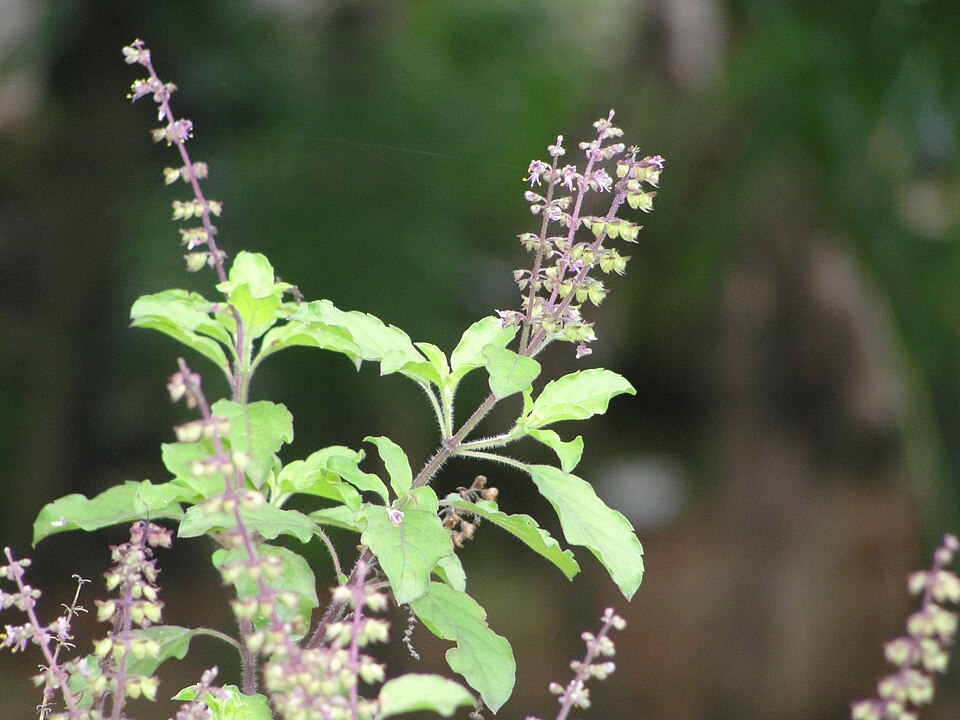
What is Holy Basil (Tulsi)?
Holy basil — tulsi — is a peppery, clove-scented basil grown in courtyards and temple gardens across India, where it is literally worshipped: many households tend a tulsi plant daily. Ayurveda classes it as a rasayana, a life-extending tonic for body and mind.
Unlike many sacred herbs, tulsi has accumulated real clinical data: randomised trials found extracts improved stress symptoms, anxiety scores, sleep and even metabolic markers (fasting glucose, lipids) versus placebo. Its eugenol, ocimumosides and ursolic acid give it a plausible pharmacology as a mild adaptogen and anti-inflammatory.
Benefits & uses
Buffers everyday stress
The flagship modern use: 300–600 mg of leaf extract daily reduced stress, anxiety and forgetfulness scores in placebo-controlled trials over 6–8 weeks — the classic adaptogen profile of "same life, better handled".
Supports healthy blood sugar and lipids
Several trials in type 2 diabetes and metabolic syndrome found modest reductions in fasting glucose and cholesterol as an add-on to standard care.
Traditional respiratory ally
Tulsi tea with ginger and black pepper is the standard home remedy across India for colds, coughs and congestion; its oils are mildly antimicrobial and expectorant.
Anti-inflammatory and antioxidant
Eugenol and ursolic acid inhibit inflammatory enzymes (COX-2 among them) — the mechanistic backdrop to its "balancing" reputation.
Oral health tradition
Chewing tulsi leaves and tulsi-based mouth rinses are traditional for gums and breath; small trials support the mouthwash use.
How to use it
Tulsi tea
The everyday form: 1–2 tsp dried leaf (or a handful of fresh) per cup, covered, 5–10 minutes. Peppery-sweet with clove notes; 1–3 cups daily. Widely sold as "tulsi tea" bags.
Extract capsules
For the studied stress effects: 300–600 mg standardised leaf extract daily with food, judged after 6–8 weeks.
Classic cold brew-up
Simmer tulsi with sliced ginger, a few peppercorns and honey — the standard kadha for stuffy winter days.
Grow it
Treat like regular basil: warmth, sun, pinch the flowers. Rama and Krishna tulsi cultivars are the classics; both beat dried leaf for aroma.
⚠️ Precautions
- Avoid in pregnancy and when trying to conceive — traditional caution plus animal data on fertility effects.
- May enhance blood-thinning medication (eugenol has mild antiplatelet action); stop before surgery.
- Can lower blood sugar — monitor if on diabetes medication.
- Generally very well tolerated; occasional mild nausea settles when taken with food.
This is general information, not medical advice — check with a health professional before using Holy Basil (Tulsi) to treat a condition or alongside medication.
Frequently asked questions
Is holy basil the same as cooking basil?
Same genus, different plant and character — tulsi is peppery and clove-like, not the sweet Genovese aroma. You can cook with tulsi (Thai cuisine does), but its home is the teapot.
Tulsi or ashwagandha for stress?
Both are credible adaptogens. Rough rule: ashwagandha for stress with poor sleep and depletion, tulsi for stress with brain-fog and a run-down immune feel — or simply pick the one whose form (tea vs capsule) you'll actually take daily.
Which tulsi variety should I buy?
Rama (green, mellow), Krishna (purple, sharper) and Vana (wild, lemony) are all used interchangeably in practice. Blends are common and fine.
Comments