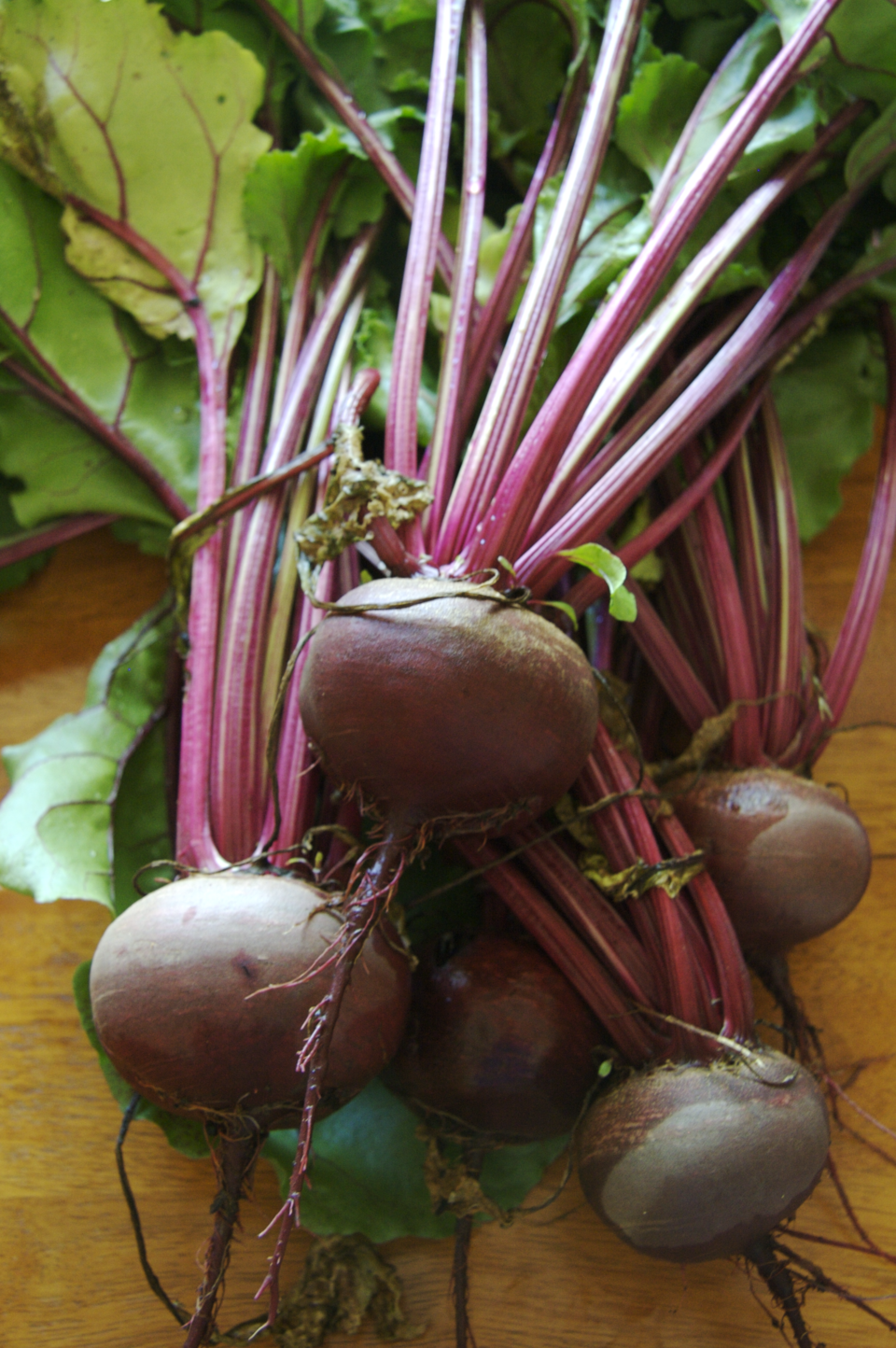
Was ist Beetroot?
Beetroot is the swollen root of Beta vulgaris, the same species that gives us chard and sugar beet. Grown since Roman times — first mainly for its leaves — it became a staple of European and Eastern European kitchens, from borscht to pickled beets. Its deep colour comes from betalain pigments, and it is one of the richest dietary sources of inorganic nitrate.
That nitrate is the story. Bacteria on your tongue convert it to nitrite, which the body turns into nitric oxide, a molecule that relaxes blood vessels. Meta-analyses of human trials show beetroot juice modestly lowers blood pressure (typically by a few points) and can improve endurance exercise efficiency, especially in recreational rather than elite athletes. It is a helpful food, not a replacement for blood-pressure medication.
Wirkung & Anwendungsgebiete
Modestly lowers blood pressure
In placebo-controlled trials, nitrate-rich beetroot juice lowered systolic blood pressure by a few mmHg on average, with larger effects in some people with raised blood pressure. Effects last while you keep taking it.
Supports endurance exercise
Studies show that dietary nitrate can reduce the oxygen cost of exercise and improve time-to-exhaustion and time-trial performance, mainly in recreational athletes. Highly trained athletes tend to benefit less.
Blood-vessel function
By boosting nitric oxide, beetroot improves how well blood vessels widen in short-term studies. Whether this translates into fewer heart attacks or strokes over years has not been shown.
Nutrient-dense food
Beetroot provides folate, potassium, manganese and fibre, and the leaves are rich in vitamin K and iron. It is a genuinely nourishing vegetable.
Colourful antioxidants
Betalains act as antioxidants and anti-inflammatories in the lab. Human evidence for specific benefits from them is still limited.
So wendest du sie an
Juice or concentrated shots
The trial route: about 70–140 ml of concentrated beetroot shot or 250–500 ml of juice, providing roughly 300–600 mg nitrate. For exercise, drink it 2–3 hours before; for blood pressure, daily.
Roasted
Scrub, wrap in foil and roast at 200 °C for 45–60 minutes until a knife slides in easily, then peel. Roasting keeps more nitrate than long boiling.
Raw and grated
Grate raw beetroot into salads or slaws with apple, carrot and a sharp dressing. Crunchy, sweet and the simplest way to eat it.
Soups and pickles
Borscht, beet soups and pickled beets are traditional ways to enjoy it through the year. Boiling leaches some nitrate into the water, so soups keep it.
Skip antibacterial mouthwash
Your tongue bacteria do the nitrate-to-nitrite conversion. Strong antiseptic mouthwash can blunt the effect, so avoid using it right around your beetroot.
⚠️ Vorsichtshinweise
- Beeturia — pink or red urine or stools after eating beets — is harmless and affects a minority of people. It can be more common in people with iron deficiency, so mention it to your doctor if you also feel tired.
- Kidney stones: beetroot, and especially beet greens, are high in oxalate. People prone to calcium oxalate stones should keep portions moderate and check with their doctor.
- Blood-pressure medicines, nitrate heart drugs (such as nitroglycerin) and erectile dysfunction drugs (such as sildenafil) all lower blood pressure too — large daily beet juice doses on top could add up, so talk to your doctor.
- Pregnancy and breastfeeding: beetroot as food is safe and nourishing; there is little data on concentrated nitrate shots, so keep to normal food amounts unless advised otherwise.
- Home-prepared beets and other high-nitrate vegetables are generally not advised for babies under about 3–6 months because of a small risk of methaemoglobinaemia; follow local infant-feeding guidance.
- Concentrated juice can cause stomach upset in some people; start with a small amount.
Dies sind allgemeine Informationen, keine medizinische Beratung. Sprich mit medizinischem Fachpersonal, bevor du Beetroot zur Behandlung einer Erkrankung oder zusammen mit Medikamenten verwendest.
Häufige Fragen
Should I worry about red urine?
Usually not — beeturia is just pigment passing through and is harmless. If you see red urine without having eaten beets, or it persists, see a doctor.
Is cooked beetroot as good as juice?
Cooked and raw beetroot still provide nitrate, but concentrated juice delivers a larger, more predictable dose, which is why trials use it. For general health, eating beetroot regularly is excellent.
Can beetroot replace my blood-pressure pills?
No. The drop is modest and depends on daily use. It can be part of a heart-healthy diet, but never stop prescribed medication without speaking to your doctor.
Kommentare