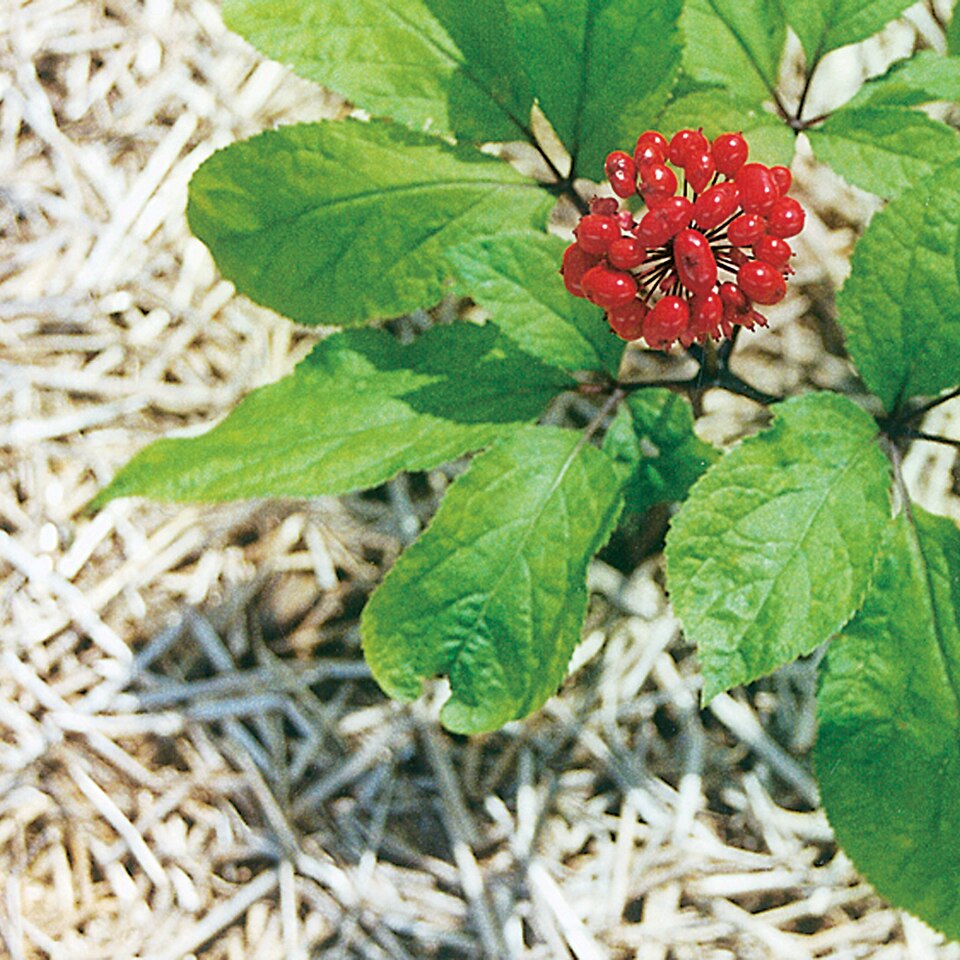
Was ist Ginseng?
Panax ginseng — Korean or Asian ginseng — is a slow-growing woodland root that has anchored East Asian medicine for over two thousand years as the supreme qi tonic. Its forked, human-ish shape gave it the name "man-root" (and centuries of doctrine-of-signatures mystique); wild roots have sold for more than gold by weight. The genus name Panax means "all-healing" — the same root as "panacea".
Stripped of mystique, the modern evidence clusters usefully: standardised extracts (ginsenosides are the actives) show consistent benefits for fatigue — including cancer-related fatigue in well-run trials — plus modest improvements in cognition under fatigue, immune resilience, and erectile function. American ginseng (Panax quinquefolius) is a gentler cousin; "Siberian ginseng" isn't ginseng at all.
Wirkung & Anwendungsgebiete
Fights fatigue
The most consistent finding: 1–2 g of root (or equivalent extract) daily reduced physical and mental fatigue across multiple trials, including a notable Mayo-led trial in cancer-related fatigue (with American ginseng).
Sharpens tired minds
Single doses of 200–400 mg extract improved mental arithmetic and reduced mental fatigue during demanding tasks in placebo-controlled studies.
Supports immune resilience
Extracts improved vaccine response and reduced cold frequency in trials; polysaccharides and ginsenosides both play roles.
May help erectile function
Meta-analyses of red ginseng trials show modest but real improvements versus placebo.
Blood sugar nudge
Both Panax species modestly lowered fasting glucose in trials — helpful context for diabetics (and one more medication interaction to mind).
So wendest du sie an
Extract capsules
The studied route: 200–400 mg of standardised extract (often G115, 4% ginsenosides) once or twice daily, morning and midday — not evening (it can be too activating for sleep).
Root tea/decoction
Traditional form: simmer 1–2 g of sliced dried root for 15–20 minutes; the East Asian habit adds a slice to soups and broths (samgyetang, Korea's ginseng chicken soup, is the delicious full-dose version).
Cycling
Traditional practice and some clinicians favour cycles (e.g. 2–3 weeks on, 1 week off) for long-term use; trial data beyond 3 months is limited either way.
Buy carefully
Ginseng is expensive and adulteration is rife. Buy standardised extracts from reputable brands, check the Latin name (P. ginseng vs P. quinquefolius), and treat bargain "ginseng" with suspicion.
⚠️ Vorsichtshinweise
- Insomnia is the most common side effect — dose in the morning; reduce or stop if wired.
- Interacts with warfarin (may reduce its effect — a documented, clinically relevant interaction), diabetes medication (additive glucose lowering), and MAOI antidepressants.
- Caution with hormone-sensitive cancers: some ginsenosides are weakly estrogenic — oncologist's call.
- High doses or stacking with caffeine can raise blood pressure and heart rate in the sensitive.
- Not established as safe in pregnancy; avoid.
- Occasional headaches and digestive upset settle with dose reduction.
Dies sind allgemeine Informationen, keine medizinische Beratung. Sprich mit medizinischem Fachpersonal, bevor du Ginseng zur Behandlung einer Erkrankung oder zusammen mit Medikamenten verwendest.
Häufige Fragen
Red vs white ginseng?
Same root, different processing: white is peeled and dried, red is steamed first — which changes the ginsenoside profile and, in tradition, makes it "warmer"/more stimulating. Most erectile-function research used red; fatigue research spans both.
Korean, American, Siberian — what's the difference?
Korean/Asian (P. ginseng) is the classic stimulating tonic; American (P. quinquefolius) is milder, favoured for fatigue with frazzle; "Siberian ginseng" (Eleutherococcus) is an unrelated plant with its own adaptogen literature — fine, but not ginseng.
How long until I feel something?
Cognitive effects can appear with single doses; fatigue benefits typically build over 2–4 weeks. If nothing at 8 weeks with a quality extract, ginseng probably isn't your herb.
Kommentare