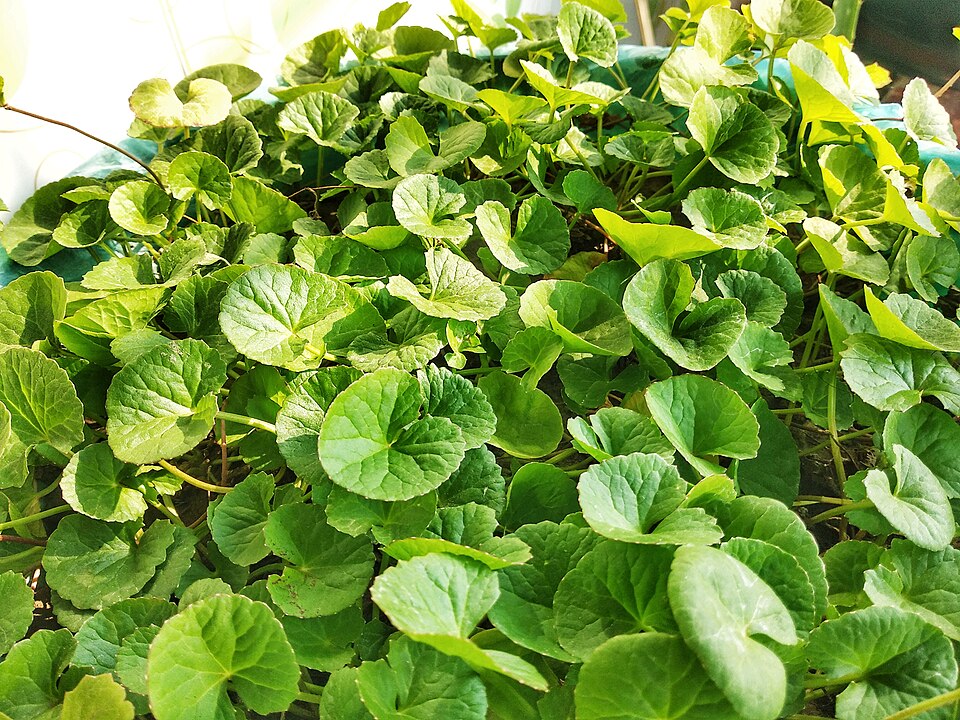
Was ist Gotu Kola?
Gotu kola is a low, creeping plant of damp, shady ground throughout tropical Asia and beyond, with small, rounded, fan-shaped leaves. It belongs to the carrot and parsley family. In Sri Lanka it is chopped into a fresh sambol, in Thailand and Vietnam it is blended into a green drink, and in Ayurvedic and Chinese medicine it has long been used for skin, wound healing and the mind. Its key compounds are triterpenes such as asiaticoside and madecassoside.
The strongest modern evidence is for its use on skin and for circulation in the legs: standardised extracts have helped wound healing and improved symptoms of poor leg circulation in several small trials. Claims about memory and anxiety are based on smaller, weaker studies. Despite its name, it contains no caffeine and is unrelated to the kola nut.
Wirkung & Anwendungsgebiete
Supports skin repair
Its triterpenes encourage collagen production in the lab, and creams containing gotu kola extracts have helped wound healing and scar appearance in small studies. That is why "cica" creams are popular for irritated or damaged skin.
Tired, swollen legs
In several small trials, a standardised extract (often called TTFCA) improved heaviness, swelling and ankle puffiness in people with chronic venous insufficiency. The studies were short and not always high quality.
May support memory and mood
A traditional brain tonic. A few small human trials suggest modest improvements in memory or calm, especially in older adults, but the evidence is far thinner than for bacopa.
Anxiety
One small trial found a single dose reduced the startle response, a marker of anxiety. Interesting, but not enough to recommend it for anxiety disorders.
A nutritious green
Eaten as a vegetable, it provides vitamins, minerals and antioxidants, much like other leafy greens.
So wendest du sie an
As food
Fresh leaves can be finely chopped into salads or sambols with coconut, onion and lime, or blended into a juice. Food amounts are the traditional and safest way to enjoy it.
Tea
1–2 tsp dried leaf per cup of hot water, steeped 10 minutes. Mildly bitter and grassy. Up to 2–3 cups daily.
Extract capsules
Standardised extracts are typically 60–120 mg daily for leg circulation, as used in trials. Follow the product label and limit use to a few weeks at a time.
Skin creams
Creams and ointments with Centella extract, asiaticoside or madecassoside can be applied twice daily to healing skin or irritation. Patch test first.
⚠️ Vorsichtshinweise
- Liver: a few cases of liver injury have been reported with gotu kola supplements. Avoid extracts if you have liver disease, and stop and see a doctor if you notice yellowing skin, dark urine or unusual tiredness.
- Pregnancy and breastfeeding: avoid supplements and concentrated extracts, as safety has not been established.
- Medication interactions: it may add to the effects of sedatives and alcohol, and could theoretically interfere with diabetes and cholesterol medicines. Stop two weeks before surgery.
- Allergy: people allergic to carrot-family plants such as celery or parsley may react, and creams can occasionally cause skin rashes.
- Like other wetland plants, it can absorb heavy metals from polluted water; buy extracts from brands that test for contaminants.
Dies sind allgemeine Informationen, keine medizinische Beratung. Sprich mit medizinischem Fachpersonal, bevor du Gotu Kola zur Behandlung einer Erkrankung oder zusammen mit Medikamenten verwendest.
Häufige Fragen
Does gotu kola contain caffeine?
No. The name is a coincidence — it is not related to the kola nut and is not a stimulant.
Is gotu kola the same as brahmi?
Sometimes it is called brahmi, but that name more commonly refers to bacopa. They are different plants, so check the Latin name.
What does "cica" on skincare mean?
It is short for Centella asiatica. Cica creams contain gotu kola extracts or its purified compounds, used for calming and repairing skin.
Kommentare