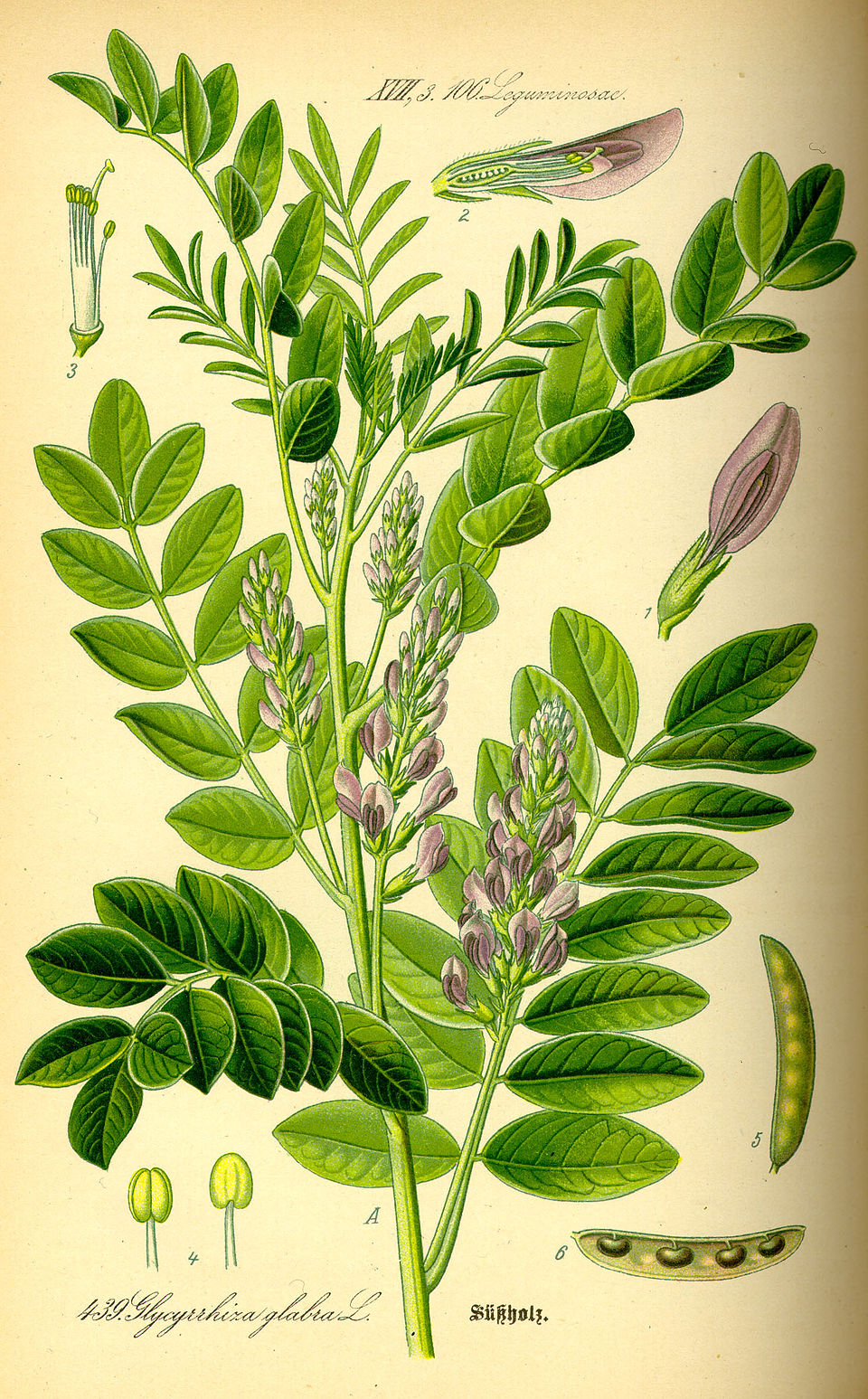
Was ist Licorice Root?
Licorice is a pea-family plant from southern Europe and western Asia whose long, fibrous roots taste intensely sweet. Chewed as a sweet and prescribed for coughs and stomach complaints by Greek, Egyptian and Chinese physicians alike, it remains one of the most widely used herbs in the world — and is the traditional "harmoniser" added to countless Chinese formulas. Its sweetness comes from glycyrrhizin, joined by flavonoids that give the root its yellow colour.
Licorice has soothing, anti-inflammatory effects on the throat and stomach lining, and some small trials support its use for indigestion and sore throat. Its big downside is also glycyrrhizin: regular high intake makes the body hold on to salt and lose potassium, raising blood pressure and in severe cases causing dangerous heart rhythm problems. DGL (deglycyrrhizinated licorice), with the glycyrrhizin removed, avoids most of this and is the safer choice for stomach use.
Wirkung & Anwendungsgebiete
Soothes sore throats and coughs
A traditional demulcent and expectorant in cough syrups and throat teas. Small trials found licorice gargles before surgery reduced post-operative sore throat — a narrow but real finding.
Indigestion and heartburn
Some small trials of licorice-containing extracts (including a well-known multi-herb formula) and DGL found improvements in indigestion symptoms. DGL is traditionally chewed before meals to coat and soothe the stomach lining.
Supports the stomach lining
Licorice compounds encourage protective mucus in the stomach in lab and animal studies, and older trials explored DGL for ulcers. It is not a treatment for ulcers; see a doctor for persistent stomach pain.
Anti-inflammatory and antiviral in the lab
Glycyrrhizin and licorice flavonoids show anti-inflammatory and antiviral activity in test tubes. Injectable glycyrrhizin is used in some countries in liver disease, but that is not the same as taking the herb.
Canker sores (topical)
Small studies found licorice patches or rinses reduced pain and healing time of mouth ulcers. A pleasant, low-risk option for occasional use.
So wendest du sie an
Tea
½–1 tsp dried, chopped root per cup, simmered 5–10 minutes. Very sweet, so it is often blended with peppermint, fennel or ginger. Keep to 1 cup a day and use it for short periods only (a few weeks at most).
DGL chewable tablets
For indigestion: typically 1–2 chewable tablets (around 380–760 mg) 20 minutes before meals. They need to mix with saliva to work, so chew rather than swallow whole. DGL is the preferred form for regular use.
Throat soother
Suck a lozenge or sip a weak tea for a scratchy throat during a cold. Short-term use is the key.
Mouth rinse or patch
For mouth ulcers, use a licorice-based patch or rinse several times a day until healed, following the product label.
⚠️ Vorsichtshinweise
- Glycyrrhizin raises blood pressure and lowers potassium. Regular intake of more than about 100 mg of glycyrrhizin a day (which can mean as little as 50–100 g of strong black licorice sweets, or a few cups of strong tea) can cause high blood pressure, swelling, muscle weakness and heart rhythm problems. Some people — especially those over 40 or with heart or kidney problems — react to lower amounts. Deaths have been reported from heavy, prolonged licorice consumption.
- Avoid non-DGL licorice if you have high blood pressure, heart disease, kidney disease, liver disease or low potassium.
- Avoid in pregnancy: high licorice intake has been linked to preterm birth and effects on the child's development. Breastfeeding safety is not established — avoid concentrated forms. Don't give medicinal licorice to children without medical advice.
- Interactions: licorice can worsen potassium loss from diuretics (water tablets) and steroids, make digoxin more dangerous, counteract blood pressure medicines, and may affect warfarin, the contraceptive pill and other hormone treatments.
- People with hormone-sensitive conditions should check with their doctor, as licorice can affect oestrogen and testosterone levels.
- Allergies are uncommon; people allergic to peas, beans or other legumes may react.
Dies sind allgemeine Informationen, keine medizinische Beratung. Sprich mit medizinischem Fachpersonal, bevor du Licorice Root zur Behandlung einer Erkrankung oder zusammen mit Medikamenten verwendest.
Häufige Fragen
Does licorice candy count?
Only if it contains real licorice extract. Many red "licorice" sweets and some black ones are flavoured with anise instead. Traditional black licorice, especially strong salty Scandinavian types, can contain a lot of glycyrrhizin.
What exactly is DGL?
Deglycyrrhizinated licorice: root extract with most of the glycyrrhizin removed. It keeps the soothing effects on the stomach and mouth without the blood pressure and potassium problems, which is why it is used for longer-term indigestion.
How long can I drink licorice tea?
Occasional cups are fine for most healthy adults. For daily use, keep it to a cup a day for no more than about 4–6 weeks, or switch to DGL. If you notice swelling, headaches or muscle weakness, stop.
Kommentare