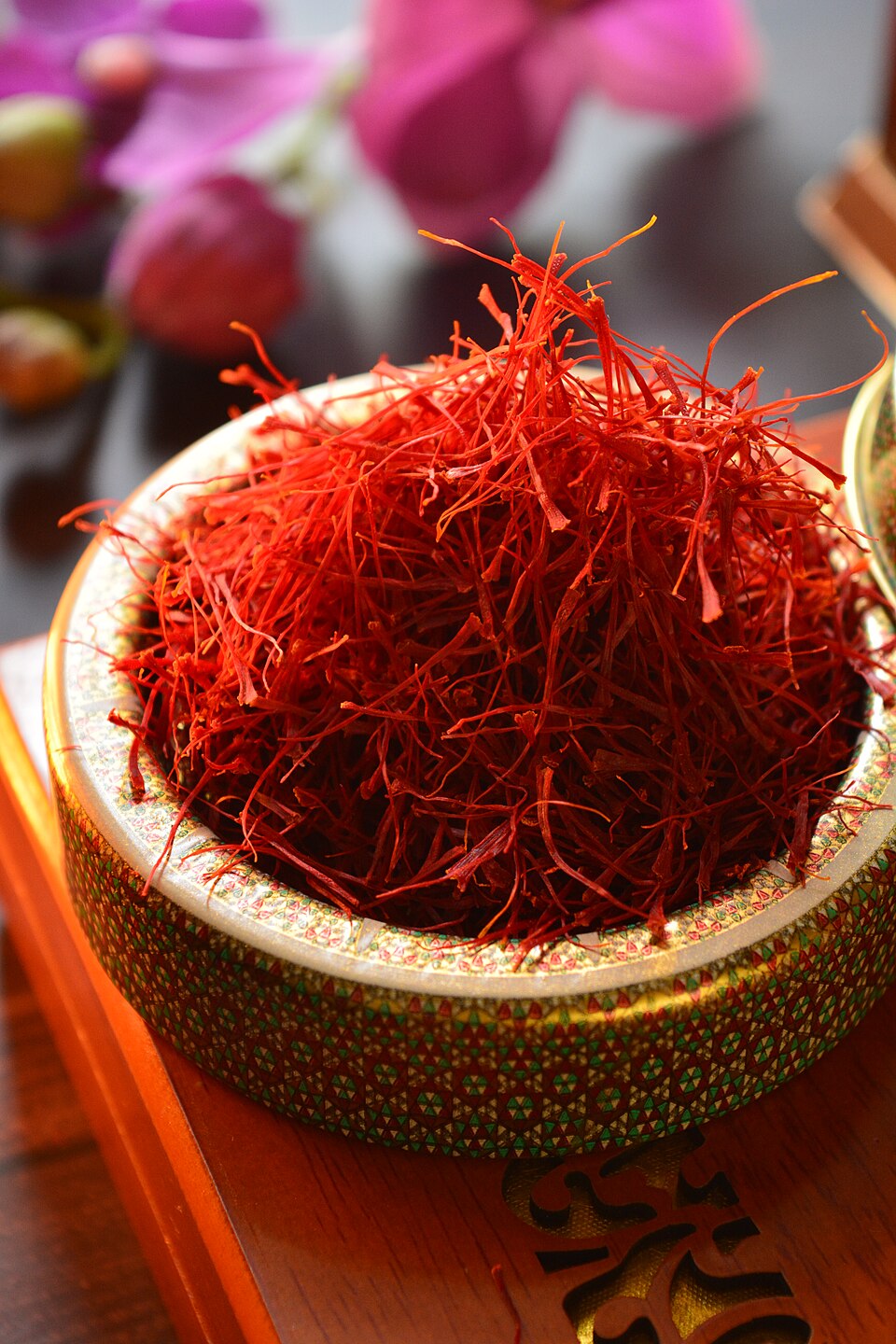
Was ist Saffron?
Saffron is the dried stigma of an autumn-flowering crocus. Each flower yields just three threads, picked by hand, so it takes well over 100,000 flowers to make a kilogram — hence the price. Grown from Iran (the largest producer) to Spain, Kashmir and Greece, it has coloured and flavoured food, dyes and medicines since antiquity. Its colour comes from crocin, its bitter taste from picrocrocin and its hay-like aroma from safranal.
Saffron is one of the better-studied herbs for mood. Several small placebo-controlled trials, mostly from Iran, found around 30 mg a day improved symptoms of mild to moderate depression, and some compared it favourably with standard antidepressants over 6–8 weeks; meta-analyses are encouraging but note the trials are short and small. It is safe at those doses — but toxic at a few grams, and it is one of the most adulterated foods on earth.
Wirkung & Anwendungsgebiete
May lift mild to moderate low mood
The best-supported use. In several randomised trials, 30 mg of saffron extract daily improved depression scores more than placebo, with fewer side effects than some drugs. Trials are short and mostly from one country, so it is a promising option to discuss with a doctor, not a replacement for treatment.
Premenstrual symptoms
A couple of small placebo-controlled trials found saffron reduced PMS symptoms, including irritability and low mood, over a few cycles.
Eye health research
Small trials in early age-related macular degeneration suggest saffron may modestly improve retinal function, likely through its antioxidant carotenoids. Evidence is preliminary.
Appetite and snacking
One trial in women found saffron extract reduced snacking and increased feelings of fullness; this is intriguing but not established.
Antioxidant carotenoids
Crocin and safranal are strong antioxidants in the lab and in animal studies, which may underlie several of the effects above.
So wendest du sie an
In cooking
Crumble a pinch (about 15–20 threads) into 2–3 tbsp warm water or stock and steep 15–20 minutes before adding to paella, risotto, biryani, bouillabaisse or baking. This draws out far more colour than dropping threads straight in.
Extract capsules
The trials used 30 mg daily (often 15 mg twice a day) of standardised extract, typically for 6–12 weeks. Choose a brand that states its standardisation and is third-party tested.
Saffron tea
Steep 5–10 threads in a cup of hot (not boiling) water for 10 minutes. Some add cardamom or honey. A traditional calming drink in Iran and Kashmir.
Buying and storing
Buy whole threads, not powder (powder is easier to fake). Real threads are deep red, trumpet-shaped at one end, and release colour slowly into water while staying red. Store airtight, dark and cool; it keeps 1–2 years.
⚠️ Vorsichtshinweise
- Toxic in large amounts: doses above about 5 grams can cause serious poisoning (vomiting, bleeding, numbness, yellowing of skin), and 12–20 grams has been reported as potentially fatal. Kitchen pinches and 30 mg supplements are nowhere near this.
- Pregnancy: avoid supplement doses and anything beyond normal cooking amounts. High doses stimulate the uterus and were historically used to induce abortion. Breastfeeding: stick to culinary use.
- Medications: it may add to the effects of antidepressants, blood-pressure drugs, sedatives and blood thinners. Talk to your doctor before combining saffron supplements with any of these.
- Bipolar disorder: mood-lifting agents can potentially trigger mania; avoid saffron supplements unless your psychiatrist agrees.
- Allergy is rare but reported, including in people sensitised to certain pollens (such as olive or ryegrass).
- Adulteration is common: cheap "saffron" may be safflower, marigold, dyed corn silk or threads padded with style (the yellow part). Real saffron cannot be cheap.
Dies sind allgemeine Informationen, keine medizinische Beratung. Sprich mit medizinischem Fachpersonal, bevor du Saffron zur Behandlung einer Erkrankung oder zusammen mit Medikamenten verwendest.
Häufige Fragen
Can cooking with saffron help my mood?
Probably not noticeably. The trials used concentrated extracts at 30 mg every day for weeks; an occasional paella contains a fraction of that, irregularly.
How can I tell if my saffron is real?
Drop a thread into warm water: real saffron slowly releases a golden-yellow colour while the thread stays red. Fakes often bleed colour instantly, turn pale, or fall apart. Price is a clue too — genuine saffron is expensive.
Is saffron safe with antidepressants?
This is not well studied. Because both act on mood pathways, combining them should only be done with your prescriber's knowledge.
Kommentare