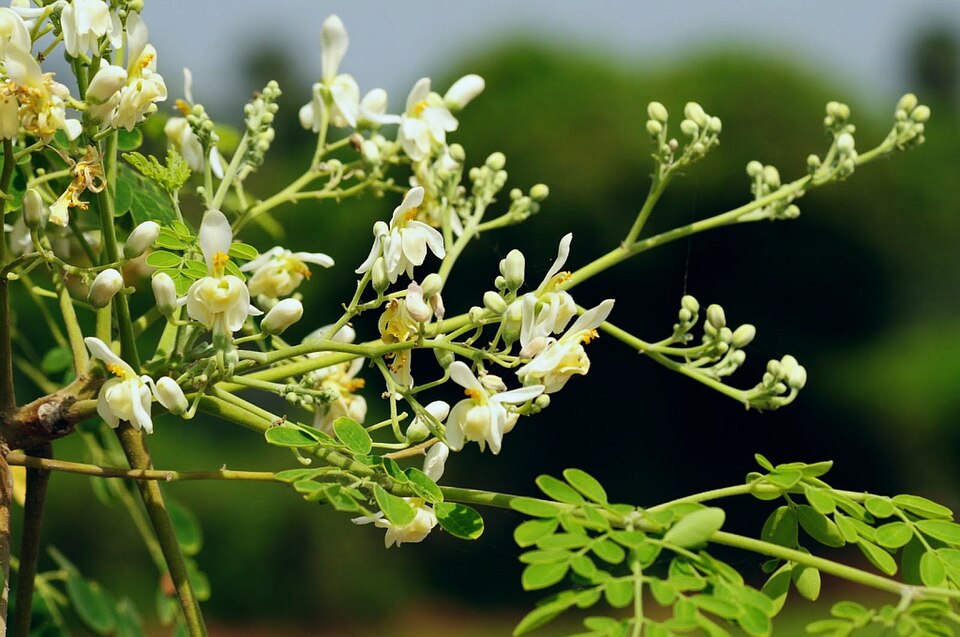
¿Qué es Moringa?
Moringa is a fast-growing, drought-tolerant tree native to the foothills of the Himalayas in northern India and now grown throughout the tropics. Almost every part is used: the leaves are cooked like spinach, the long pods ("drumsticks") go into curries, and the seeds yield an oil and can even help clear muddy water. Its leaves are rich in protein, vitamin A (as carotenoids), vitamin C, calcium and iron, which is why aid organisations promote it against malnutrition.
In the West it is sold as a green powder "superfood". Its nutritional value is real, especially fresh; health claims are less secure. Small human trials suggest leaf powder may modestly lower blood sugar and cholesterol and help milk supply after birth, but studies are small and variable, and much of the rest comes from lab and animal work.
Beneficios y usos
Nutrient-dense leafy green
Gram for gram, fresh and dried moringa leaves are rich in vitamin A carotenoids, vitamin C, calcium, iron and protein. In communities with limited diets it is a valuable food; for people with varied diets it is one good green among many.
May help blood sugar
A few small trials found moringa leaf powder modestly reduced post-meal blood sugar or fasting glucose. Results are inconsistent and doses vary, so it cannot replace diabetes treatment.
Supports breast milk supply (tradition and small trials)
Moringa is a traditional galactagogue in the Philippines and elsewhere, and a few small trials found it increased milk volume in the first days after birth. Evidence is limited; talk to a lactation consultant.
Cholesterol and inflammation
Animal and some small human studies suggest moringa may modestly lower cholesterol and inflammatory markers, likely due to its polyphenols and isothiocyanates. Promising but unproven.
Clean water helper
Crushed moringa seeds act as a natural coagulant, clumping particles in muddy water so they settle — a real, low-cost technique in parts of Africa and Asia (it clarifies water but does not fully sterilise it).
Cómo usarla
Leaf powder
Stir 1–2 tsp (about 3–7 g) daily into smoothies, soups, yoghurt or porridge. Start with a small amount — it is earthy, a little bitter, and can loosen the bowels. Most trials used a few grams a day.
Fresh leaves
Strip the small leaflets from the stems and cook like spinach, in dals, stews or omelettes. Add near the end of cooking to preserve vitamins.
Drumstick pods
Cut young pods into short lengths and simmer in curries or sambar; scrape out the soft flesh and seeds with your teeth and discard the fibrous skin.
Tea
Steep 1 tsp dried leaf in a cup of hot water for 5 minutes. Mild and grassy; pleasant with lemon or mint.
⚠️ Precauciones
- Pregnancy: avoid moringa root, bark and flowers, which contain compounds that can cause uterine contractions and have been used traditionally to cause abortion. Leaves eaten as food are generally considered safe, but avoid concentrated supplements in pregnancy.
- Breastfeeding: leaf use appears safe in small studies, but check with your doctor or lactation consultant before using supplements.
- Diabetes and blood-pressure medication: moringa may lower blood sugar and blood pressure, so combining it with these drugs could push levels too low. Monitor and tell your doctor.
- Other medications: moringa may affect how the liver processes some drugs and has been reported to interact with levothyroxine; take advice if you are on regular medication.
- Root and root bark contain potentially toxic alkaloids and should not be eaten by anyone. Very high leaf doses can cause stomach upset and diarrhoea.
- Choose tested powder: some imported products have been found contaminated with bacteria or heavy metals.
Esta es información general, no consejo médico. Consulta a un profesional de la salud antes de usar Moringa para tratar una afección o junto con medicamentos.
Preguntas frecuentes
Is moringa really a "superfood"?
It is genuinely nutritious, especially for people whose diets are low in vegetables. But a teaspoon of powder does not contain vitamins in huge amounts, and it is not a cure for anything. Think of it as a useful leafy green.
Why is it called the drumstick tree?
After its long, thin seed pods, which look a bit like drumsticks and are a common vegetable in South Indian cooking.
Can I grow moringa?
Yes, in warm climates or as a pot plant brought indoors in winter. It grows remarkably fast, and you can harvest leaves regularly by pinching back the tips.
Comentarios