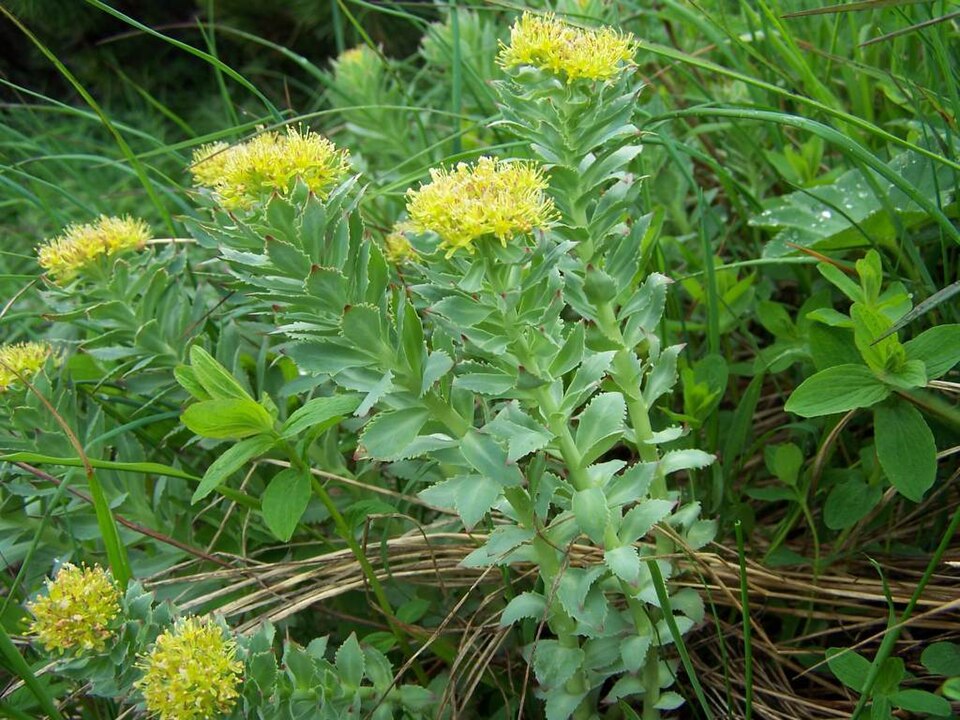
¿Qué es Rhodiola?
Rhodiola is a small succulent of cold, rocky places — Arctic coasts, Scandinavian and Alpine mountains, Siberia. Its thick root smells faintly of roses when cut, hence the names roseroot and golden root. Vikings and Siberian peoples reputedly used it for stamina, and Soviet-era researchers studied it as a tonic for soldiers and athletes (and, by some accounts, cosmonauts). The compounds usually credited are rosavins and salidroside.
The European Medicines Agency accepts it as a traditional herbal medicine for temporary relief of stress symptoms such as fatigue and a sense of weakness. Human trials are mostly small and of mixed quality, but several placebo-controlled studies found modest improvements in stress-related fatigue, mental performance under pressure and mild low mood. It is a helpful nudge, not a cure for burnout.
Beneficios y usos
Eases stress-related fatigue
The best-studied use. In several small placebo-controlled trials, people with stress-related exhaustion or burnout symptoms reported less fatigue and better concentration after a few weeks of standardised extract.
Mental performance under pressure
Studies in students at exam time, night-shift workers and doctors on call suggest small gains in mental work capacity and less fatigue. The trials are short and small, so treat this as promising rather than proven.
May lift mild low mood
A couple of small trials in mild-to-moderate depression found modest improvements, in one case smaller than a standard antidepressant but with fewer side effects. It is not a substitute for proper treatment of depression.
Physical endurance
Its Soviet reputation was built partly on sport. Human results for exercise performance are mixed: some studies show slightly less perceived exertion, others show nothing measurable.
Antioxidant activity
Salidroside and related compounds are antioxidant and protect cells in lab and animal studies. Whether that matters in people at normal doses is unknown.
Cómo usarla
Standardised extract
The form used in trials: typically 200–600 mg daily of an extract standardised to around 3% rosavins and 1% salidroside. Start at the low end.
Timing
Take it in the morning or early afternoon, ideally before breakfast or lunch. Taken late in the day it can interfere with sleep.
Give it a fair trial
Some people notice an effect within days; trial results usually appear over 2–4 weeks. If nothing has changed after a month, it probably isn't for you.
Cycle it
Many herbalists suggest using it for a stressful period — exam season, a heavy work stretch — then taking a break, rather than every day indefinitely. Long-term safety data is limited.
Choose carefully
Buy products naming Rhodiola rosea and stating the rosavin and salidroside content; cheaper products sometimes contain other Rhodiola species with a different chemistry.
⚠️ Precauciones
- Pregnancy and breastfeeding: there is no reliable safety data, so avoid it.
- Can feel stimulating: jitteriness, irritability or trouble sleeping occur in some people, especially at higher doses or when taken late.
- Bipolar disorder: stimulating herbs like rhodiola may trigger agitation or mania in susceptible people — avoid unless your psychiatrist agrees.
- Medication interactions: it may add to the effects of antidepressants and may interact with diabetes and blood pressure medicines; lab studies also suggest effects on liver enzymes that process many drugs. Check with a pharmacist if you take regular medication.
- Autoimmune conditions and immune-suppressing drugs: rhodiola may stimulate immune activity, so ask your doctor first.
- Wild populations have been overharvested in parts of its range; prefer cultivated sources where you can find them.
Esta es información general, no consejo médico. Consulta a un profesional de la salud antes de usar Rhodiola para tratar una afección o junto con medicamentos.
Preguntas frecuentes
What does "adaptogen" actually mean?
It is an old Soviet-era term for a substance that supposedly helps the body resist stress in general. It is not a recognised medical category; it is better to judge each herb on the specific effects trials have shown.
Can I take it with coffee?
Usually yes, but both can be stimulating. If you feel wired or sleep badly, cut back on one of them.
Will it fix burnout?
No. At best it takes the edge off fatigue while you deal with the causes — sleep, workload, support. Persistent exhaustion deserves a doctor's check for anaemia, thyroid problems and depression.
Comentarios