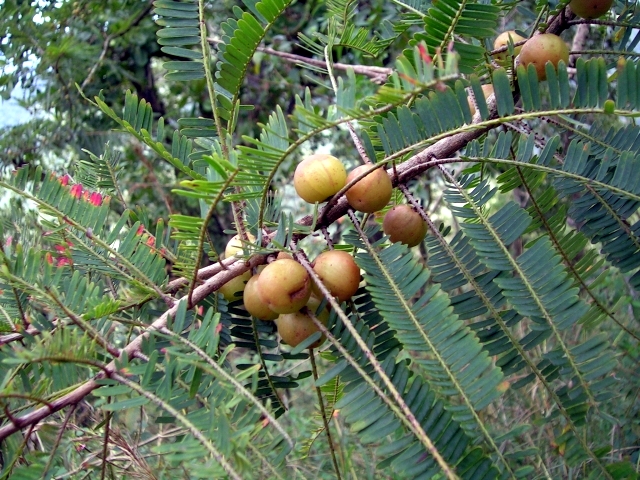
Qu'est-ce que Amla / Indian Gooseberry ?
Amla is the pale green, sharply sour fruit of a small tree native to India and South-East Asia. It is one of the most important plants in Ayurveda, where it is considered rejuvenating, and it is one of three fruits in Triphala as well as the base of the jam-like tonic chyawanprash. The fruit is rich in vitamin C (though amounts vary a lot between sources and processing) and in tannins and related polyphenols such as emblicanins, gallic acid and ellagic acid, which account for its astringent taste.
Human evidence is growing but modest. Small randomised trials suggest amla extract may improve cholesterol, blood sugar and blood-vessel function, and one small trial found it eased reflux symptoms. Most studies are short, small and often industry-funded, so benefits are promising rather than established.
Bienfaits et usages
Rich in vitamin C and polyphenols
Fresh amla is one of the richest fruit sources of vitamin C, alongside tannins and flavonoids that are strongly antioxidant in the lab. Drying and heating reduce the vitamin C, though the tannins remain.
Cholesterol and blood-fat support
Several small trials found amla extract modestly lowered total cholesterol, LDL and triglycerides over a few months, and one small trial reported effects similar to a low-dose statin — but the studies are small and need confirmation.
Blood sugar
Small human studies suggest amla powder may lower fasting and post-meal blood sugar in people with type 2 diabetes. It is not a substitute for treatment.
Reflux and indigestion
A traditional digestive remedy; a small placebo-controlled trial found amla tablets reduced heartburn and reflux frequency over four weeks.
Hair care tradition
Amla oil is widely used in South Asia to condition hair and prevent greying. There is little clinical evidence, but it is a long-standing and gentle cosmetic use.
Comment l'utiliser
Fresh fruit
Eat raw with a pinch of salt and chilli, as is common in India, or slice into salads and chutneys. Very sour and astringent — most people start with one or two segments.
Powder
1/2–1 tsp (about 1–3 g) of dried amla powder once or twice daily in water, juice or honey. Trials typically used 500 mg–1 g of extract twice daily.
Juice
15–30 ml of amla juice diluted in a glass of water, usually in the morning. Choose unsweetened brands.
Triphala and chyawanprash
Triphala (amla, haritaki and bibhitaki) is taken as powder or tablets, often at night for digestion; chyawanprash is eaten by the spoonful. Follow the label.
Pickles and preserves
Amla murabba (a sweet preserve) and pickles are traditional ways to enjoy it year-round, though they add sugar or salt.
⚠️ Précautions
- Blood thinners and antiplatelet drugs: amla may reduce platelet clumping, so it could increase bleeding risk with warfarin, clopidogrel or aspirin. Stop supplements two weeks before surgery.
- Diabetes medication: amla may lower blood sugar; monitor your levels if you combine it with glucose-lowering drugs.
- Pregnancy and breastfeeding: amla as a food is traditionally eaten and considered safe, but concentrated extracts have not been studied — avoid them unless advised.
- Digestive effects: large amounts can cause loose stools or stomach upset, and the acidity may irritate some sensitive stomachs despite its use for reflux.
- Quality: some imported Ayurvedic products have been found contaminated with lead, mercury or arsenic. Buy from brands that publish third-party testing.
- Allergy is rare; stop if you notice itching, rash or swelling.
Ceci est une information générale, pas un avis médical. Consultez un professionnel de santé avant d'utiliser Amla / Indian Gooseberry pour traiter un trouble ou en association avec des médicaments.
Questions fréquentes
Is amla the same as a gooseberry?
No — it is unrelated to the European gooseberry. It got the name "Indian gooseberry" simply because it looks a bit like one and is sour.
Why does water taste sweet after eating amla?
Its tannins temporarily change the way your taste buds perceive flavour, so the next sip of water can taste sweet. It is harmless and one of amla's charms.
Does amla really have more vitamin C than oranges?
Fresh amla usually does, often several times more per gram. Processed powders and juices can contain much less, depending on how they are made.
Commentaires