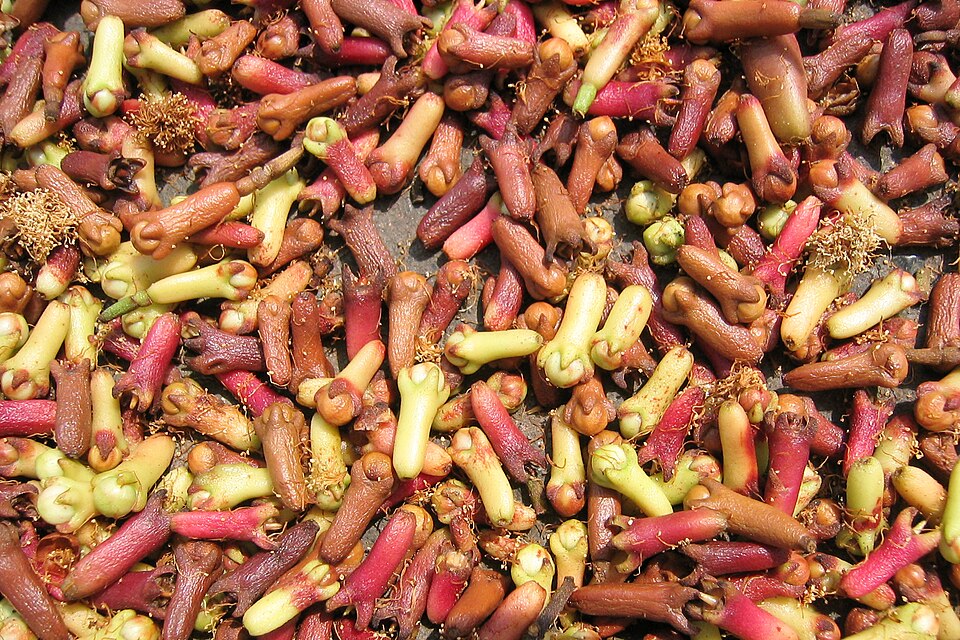
Qu'est-ce que Clove ?
Cloves are the unopened flower buds of a tropical evergreen tree native to the Maluku Islands of Indonesia, once so valuable that European powers fought wars over them. Their intense, numbing warmth comes from eugenol, which makes up most of clove oil. Eugenol is still used in dentistry today, for example in some temporary fillings and dressings for painful tooth sockets.
In the kitchen cloves are safe and wonderful in small amounts. Their best-supported traditional use is as a temporary dental painkiller: eugenol numbs tissue and kills bacteria, and one small study found a clove gel numbed gums about as well as a standard benzocaine gel. But clove oil is a genuine hazard if swallowed — even small amounts have caused serious poisoning in young children.
Bienfaits et usages
Temporary toothache relief
A clove held against a sore tooth, or a drop of diluted clove oil, numbs the area for a while. It is a stopgap until you can see a dentist, not a treatment for the cause.
Antiseptic compounds
Eugenol kills many bacteria and fungi in the lab, which is why it has a place in dental materials. Eating cloves does not disinfect the body.
Exceptionally rich in antioxidants
Ground cloves top many lab rankings of antioxidant capacity per gram. Because you use only a pinch, the practical impact is modest, but it adds to a spice-rich diet.
Warming digestive tradition
Cloves are used in Ayurvedic and Chinese medicine for nausea, wind and a cold stomach. This is traditional use; human trials are lacking.
Comment l'utiliser
Whole in slow cooking
Stud an onion with 3–4 cloves for stocks, bread sauce or braises; add a few to rice pilau, curries, pickles, mulled wine or poached pears. Remove before serving — biting one is intense.
Ground, sparingly
A small pinch is plenty in gingerbread, spiced cakes, pumpkin pie spice, garam masala and Chinese five-spice. Ground cloves lose aroma quickly; grind whole ones for best flavour.
Clove tea
Steep 2–3 whole cloves (lightly crushed) in a cup of just-boiled water for 10 minutes, perhaps with cinnamon and ginger. Warming, but strong — one or two cups is plenty.
Toothache stopgap (adults only)
Hold a whole clove gently against the sore spot, or mix 1 drop of clove oil into ½–1 tsp olive or coconut oil and dab on with a cotton bud. Use only briefly and see a dentist.
⚠️ Précautions
- Clove oil is toxic if swallowed. Case reports describe as little as a teaspoon or so causing liver failure, seizures, dangerously low blood sugar and coma in young children. Store it locked away from children; if a child swallows any, contact emergency services or poison control immediately.
- Never use clove oil on babies' or toddlers' gums for teething. It is also toxic to pets — especially cats — so do not use it on or near animals.
- Undiluted clove oil burns skin and gums, and repeated use can damage the tissue around a tooth. Always dilute, and use only short-term.
- Eugenol slows blood clotting. Avoid clove oil and supplements if you take anticoagulants or antiplatelet drugs or have a bleeding disorder, and stop them two weeks before surgery.
- Pregnancy and breastfeeding: cooking amounts are fine; avoid clove oil by mouth and clove supplements.
- Allergy: eugenol can cause contact dermatitis, especially in people sensitive to balsam of Peru or fragrances.
Ceci est une information générale, pas un avis médical. Consultez un professionnel de santé avant d'utiliser Clove pour traiter un trouble ou en association avec des médicaments.
Questions fréquentes
Can I put clove oil on my baby's gums?
No. Clove oil is toxic to small children if swallowed, and it can burn delicate gums. Ask a pharmacist about safe teething options instead.
Why does clove help a toothache?
Its main compound, eugenol, is a local anaesthetic and antiseptic — dentists use it in some materials for exactly that reason. It numbs pain for a while but does not fix decay or infection.
How many cloves are safe to eat?
Normal cooking amounts — a few whole cloves in a dish or a pinch of ground clove — are safe. The danger lies in concentrated oil, not the spice.
Commentaires