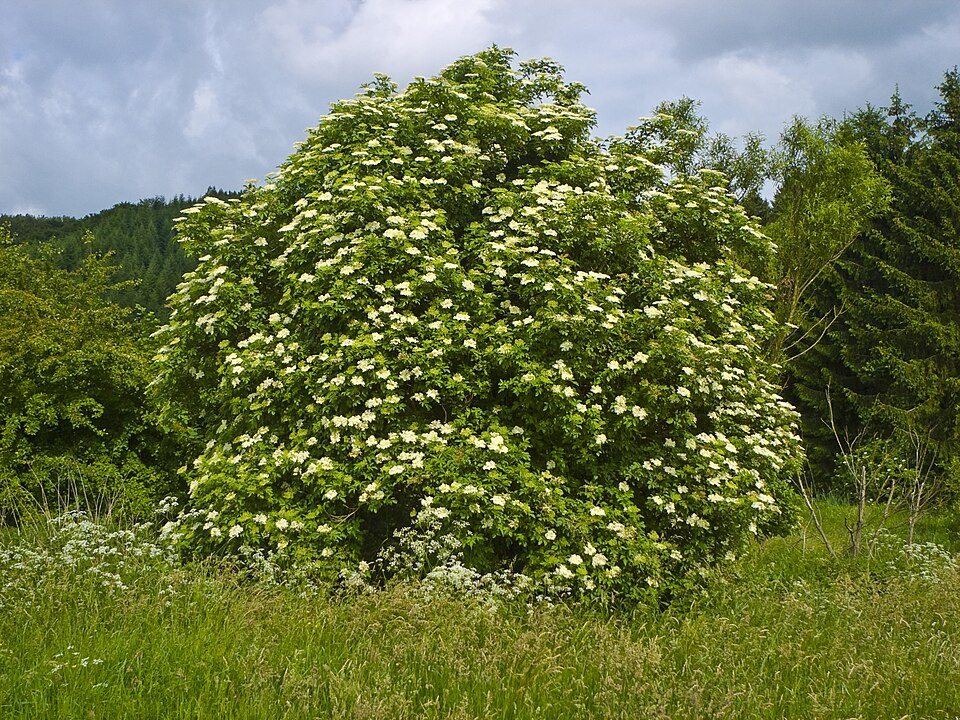
Qu'est-ce que Elderberry ?
Elder is a common European hedgerow shrub with flat, creamy umbrellas of scented flowers in early summer and drooping clusters of near-black berries in autumn. It has been called "the medicine chest of the country people": the flowers make cordials and fritters, the berries go into syrups, jams and wines. The berries are rich in anthocyanins, the deep purple pigments that give them their colour.
Small trials suggest elderberry extract may shorten colds and flu by a couple of days when started early, and lab studies show it can interfere with viruses attaching to cells. The trials are few, small and partly industry-funded, so the evidence is encouraging rather than settled. One point is not in doubt: raw berries, leaves, stems and unripe fruit contain compounds that cause nausea and vomiting — elderberries must be cooked.
Bienfaits et usages
May shorten colds and flu
Several small placebo-controlled trials found elderberry extract, started within the first day or two of symptoms, shortened illness by a couple of days, and in some cases more. Larger, independent trials are needed; one well-run study in flu found no benefit.
Travel colds
A trial in air travellers found those taking elderberry had shorter, milder colds, though no fewer of them. Interesting, but a single study.
Antiviral activity in the lab
In test tubes, elderberry compounds block some influenza viruses from entering cells. Lab results often don't translate directly to people.
Antioxidant-rich food
The berries are a good source of anthocyanins and vitamin C, like other dark berries. Cooking reduces the vitamin C but keeps much of the colour and flavour.
Elderflower for feverish colds
The flowers are a traditional hot tea to promote sweating in feverish colds. This is traditional use without much clinical testing, but it is gentle and pleasant.
Comment l'utiliser
Syrup
Simmer 1 cup of ripe, de-stemmed berries with 2–3 cups of water for 30–45 minutes, mash, strain, then stir in honey when cooled a little. Typical adult use is 1 tbsp up to four times a day for a few days at the first sign of a cold. Keep in the fridge and use within a few weeks.
Standardised extract
Lozenges, gummies and syrups based on the trialled extracts; follow the label. Start at the first sniffle — trials suggest it does little once a cold is established.
Elderflower tea
1–2 tsp dried flowers per cup, covered, 5–10 minutes. Drink hot, 2–3 cups daily during a cold.
In the kitchen
Cooked berries go into jams, pies, crumbles and sauces for game. Elderflowers make cordial or light batter fritters — shake out insects and remove the thick stems first.
⚠️ Précautions
- Never eat raw berries, leaves, stems, bark or roots. They contain cyanide-producing glycosides and other compounds that cause nausea, vomiting and diarrhoea; thorough cooking of ripe berries greatly reduces the risk. Remove every bit of green stem before cooking.
- Only use black elder (Sambucus nigra) and be sure of your identification; red-berried elder and some look-alikes are more toxic. Keep raw berries away from children and pets.
- Pregnancy and breastfeeding: culinary amounts of cooked berries are generally considered fine, but supplement-dose safety is not established — ask your midwife or doctor.
- Because it may stimulate the immune system, people with autoimmune conditions or on immunosuppressant drugs (for example after a transplant) should check with their doctor first.
- It may add to the effect of diabetes medicines and diuretics in theory; mention it to your pharmacist if you take either.
- Allergic reactions are uncommon but possible, especially in people sensitive to other plants in the same family (Adoxaceae/honeysuckle relatives).
Ceci est une information générale, pas un avis médical. Consultez un professionnel de santé avant d'utiliser Elderberry pour traiter un trouble ou en association avec des médicaments.
Questions fréquentes
Can I take elderberry every day to prevent colds?
The evidence is mainly for starting it at the first symptoms, not for daily prevention. Short courses are the best-studied approach.
Does elderberry cause a "cytokine storm"?
This worry spread online during COVID-19, based on lab findings. There is no evidence that elderberry causes dangerous immune overreactions in people, but if you are seriously ill, seek medical care rather than relying on syrups.
Are the berries safe once dried?
Drying alone doesn't reliably make them safe. Dried berries should still be simmered well — for example as tea or syrup — before use.
Commentaires