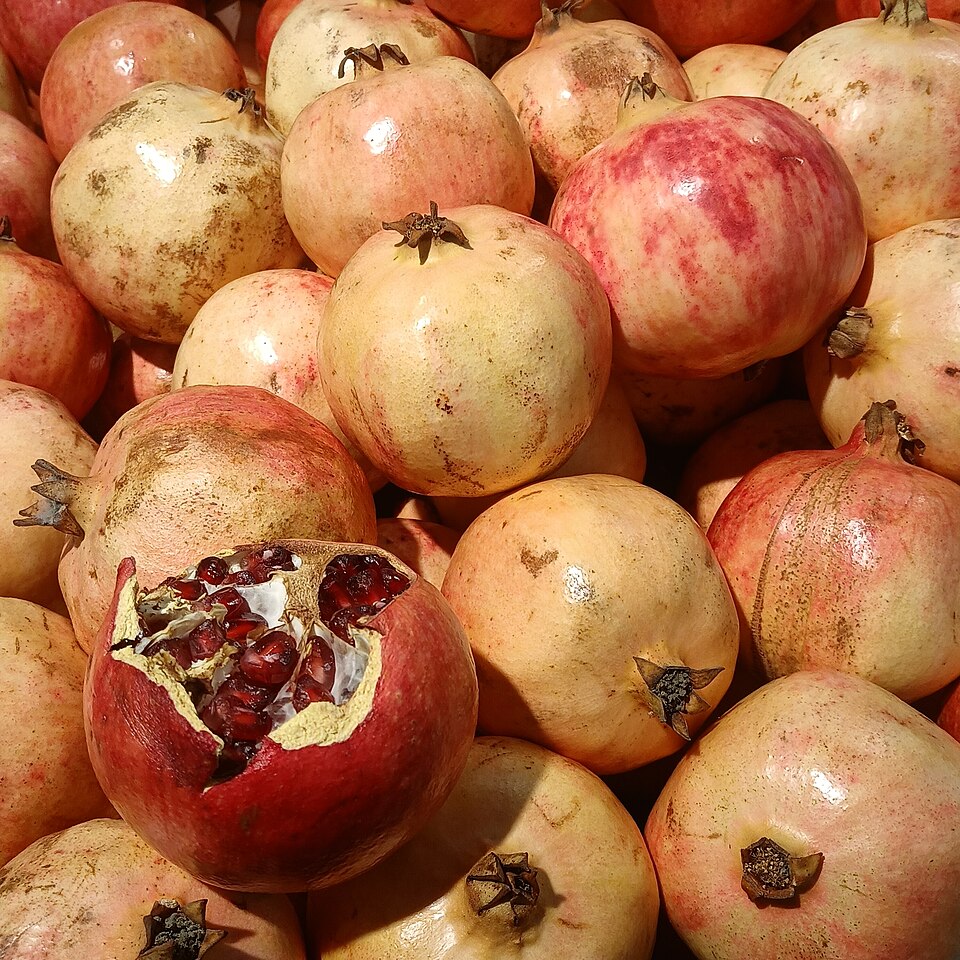
What is Pomegranate?
Pomegranate is a small tree native to the region from Iran to northern India, cultivated around the Mediterranean since antiquity and a symbol of fertility and abundance in Greek, Persian, Jewish and Christian tradition. Its leathery fruit holds hundreds of juicy seeds (arils). The fruit, and especially its peel, is rich in polyphenols called ellagitannins, including punicalagins, which gut bacteria convert to compounds called urolithins.
Randomised trials and meta-analyses show that regular pomegranate juice can modestly lower blood pressure, particularly systolic pressure. Other claims — for cholesterol, arterial health, exercise recovery and prostate cancer — have mixed or preliminary evidence. As a fruit it is nutritious and safe; the juice, however, is high in natural sugar.
Benefits & uses
Modestly lowers blood pressure
Meta-analyses of randomised trials found that drinking pomegranate juice lowered systolic blood pressure by a few points, with effects seen in both short and longer studies. Helpful alongside, not instead of, other measures.
Rich in polyphenols
Pomegranate juice has strong antioxidant activity in the lab, mostly from punicalagins. Whether this translates into disease prevention in people is not yet clear.
Heart and artery research
Small studies suggested pomegranate juice may slow thickening of artery walls or improve blood flow to the heart, but results have been inconsistent and trials small.
Exercise recovery
A few small trials found pomegranate juice or extract reduced muscle soreness and strength loss after hard exercise. Promising but preliminary.
Prostate cancer research
Early uncontrolled studies suggested juice might slow rising PSA levels after treatment, but a later placebo-controlled trial found no clear benefit. It should not be used as a cancer treatment.
How to use it
Fresh arils
Cut the fruit in half, hold it cut-side down over a bowl of water and tap the back firmly with a wooden spoon; the seeds fall out and the pith floats. Eat a handful as a snack, or scatter over salads, yoghurt, porridge and grain dishes.
Juice
Trials generally used 150–250 ml of pure pomegranate juice daily. Choose 100% juice with no added sugar and count it towards your fruit intake — it is still sugary.
Pomegranate molasses
A thick, tangy reduction used in Middle Eastern cooking. A tablespoon or two in dressings, marinades or with roast vegetables adds deep sweet-sour flavour.
Tea
Dried peel or flowers are used in some herbal teas, and pomegranate green tea blends are common. Use shop-bought blends rather than home-made peel extracts.
Extracts
Capsules of standardised extract exist, but evidence is weaker than for the juice. Choose tested brands and follow the label.
⚠️ Precautions
- Medication interactions: in lab studies pomegranate inhibits liver enzymes that process some drugs, and there are case reports of interactions with warfarin. The evidence is weaker than for grapefruit, but if you take warfarin, statins or other regular medication, check with your pharmacist before drinking it daily.
- Blood pressure medicines: regular juice may add to their blood-pressure-lowering effect, so monitor if you start drinking it daily.
- Pregnancy and breastfeeding: the fruit and juice are safe as food. Avoid extracts of the root, stem bark and rind, which are more concentrated and lack safety data.
- Root and bark contain alkaloids (pelletierines) once used against tapeworms that are toxic in larger amounts, causing dizziness, vomiting and vision problems. Do not make home extracts of root or bark.
- Allergy: rare, but reactions ranging from an itchy mouth to swelling and breathing difficulty have been reported, sometimes in people with other fruit or pollen allergies.
- Sugar and potassium: the juice is high in sugar and potassium. People with diabetes or kidney disease, or on potassium-sparing medication, should keep portions small and check with their doctor.
This is general information, not medical advice — check with a health professional before using Pomegranate to treat a condition or alongside medication.
Frequently asked questions
Can I eat the white seeds inside the arils?
Yes — the small crunchy seeds are edible and add fibre. Just avoid the bitter white pith and leathery peel.
Is pomegranate juice as good as the whole fruit?
The juice provides most of the polyphenols and is what the blood-pressure trials used, but the whole arils add fibre and less concentrated sugar. Both are good; keep juice portions modest.
Does pomegranate interact with drugs like grapefruit does?
Possibly, but the evidence is much weaker. Lab studies and a few case reports raise concern, especially with warfarin, so ask your pharmacist if you take regular medication.
Comments