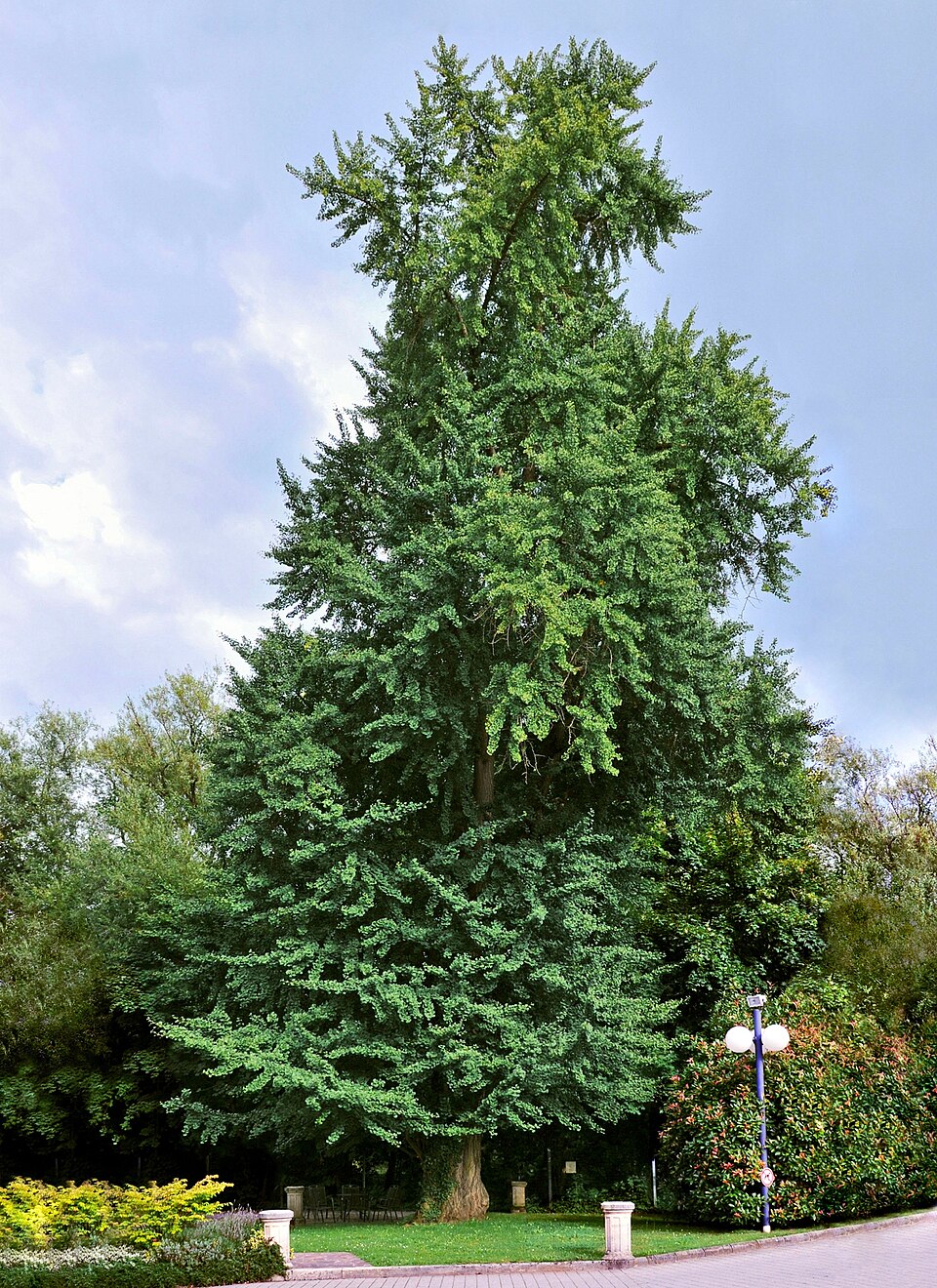
Was ist Ginkgo?
Ginkgo is the sole survivor of an ancient group of trees that grew alongside the dinosaurs; its fan-shaped, two-lobed leaves turn a brilliant butter-yellow in autumn. Tough enough to survive city pollution — and famously, the Hiroshima blast — it is planted along streets worldwide. Chinese medicine traditionally used the seeds; the leaf extract is a 20th-century European development. The leaf's active compounds are flavonoid glycosides and terpene lactones (ginkgolides and bilobalide).
Standardised leaf extract (especially the one known as EGb 761) has been tested in many trials. For people already living with mild to moderate dementia, some meta-analyses report small improvements in thinking and daily function, while others find the results inconsistent. For preventing dementia or sharpening memory in healthy people, large, long-term trials found no benefit. It is a reasonable thing to discuss with a doctor in specific situations — not a brain booster.
Wirkung & Anwendungsgebiete
Modest help in existing dementia
Several trials of standardised extract (around 240 mg daily) in mild to moderate dementia reported small gains in cognition and daily activities, particularly where symptoms included mood and behaviour changes. Results vary between studies, and it doesn't replace medical treatment.
Does not prevent dementia
A large US trial following thousands of older adults for about six years found ginkgo did not reduce the rate of dementia or slow cognitive decline. Worth knowing before buying it "just in case".
Circulation in the legs
Some trials found ginkgo slightly increased pain-free walking distance in people with intermittent claudication (leg pain from narrowed arteries). The effect is small compared with supervised exercise.
Possibly altitude sickness and dizziness
Mixed small studies suggest it may help some forms of vertigo, and results for altitude sickness are contradictory. For tinnitus, the better-quality trials show no benefit.
Antioxidant in the lab
Ginkgo flavonoids protect cells from oxidative damage in laboratory studies. How relevant that is to everyday health in people is unclear.
So wendest du sie an
Standardised extract
Use products standardised to about 24% flavonoid glycosides and 6% terpene lactones, typically 120–240 mg daily split into two doses. Allow 6–12 weeks before judging. This is the form used in almost all trials.
Check the ginkgolic acid limit
Good extracts remove most ginkgolic acids (irritant and allergenic compounds), usually to below 5 ppm. Look for this on the label or from reputable brands.
Avoid home-made leaf tea
Tea from raw leaves delivers a small, unpredictable dose of the useful compounds and may contain the irritant ginkgolic acids that extracts remove. Standardised extracts are the safer choice.
Seeds (culinary, with care)
In East Asian cooking, a few thoroughly cooked ginkgo nuts appear in dishes like chawanmushi or congee. Eat only a small handful at most, never raw — see precautions.
⚠️ Vorsichtshinweise
- Ginkgo may increase bleeding risk. Talk to your doctor before combining it with warfarin, aspirin, clopidogrel, other blood thinners or NSAIDs, and stop it about two weeks before surgery or dental work.
- Avoid in pregnancy and breastfeeding; it may increase bleeding around delivery and safety is not established.
- The seeds are toxic in quantity. They contain ginkgotoxin, which can cause vomiting and seizures — children are especially vulnerable, and poisonings have been reported from eating raw or large amounts of cooked seeds. Keep them away from children and pets.
- People with epilepsy should avoid ginkgo products, as seed toxins may lower the seizure threshold and some extracts may carry traces.
- Ginkgo may interact with some antidepressants, diabetes medication and drugs broken down by the liver; check with a pharmacist if you take regular medicines.
- The smelly fruit pulp around the seeds contains ginkgolic acids that cause blistering skin rashes similar to poison ivy — wear gloves if collecting. Common side effects of the extract include headache, stomach upset and dizziness.
Dies sind allgemeine Informationen, keine medizinische Beratung. Sprich mit medizinischem Fachpersonal, bevor du Ginkgo zur Behandlung einer Erkrankung oder zusammen mit Medikamenten verwendest.
Häufige Fragen
Will ginkgo improve my memory if I'm healthy?
Probably not. Well-designed trials in healthy adults have not shown meaningful memory benefits. Sleep, exercise and managing blood pressure have much better evidence.
Why does the street tree smell so bad in autumn?
Female ginkgo trees drop fleshy seeds whose outer coat contains butyric acid — the same compound in rancid butter. Many cities now plant only male trees.
Is ginkgo the same as the ginkgo nuts in Asian dishes?
They come from the same tree but are different parts. Supplements use the leaf; the nuts are seeds, which are eaten cooked and in small amounts because of their toxicity.
Kommentare