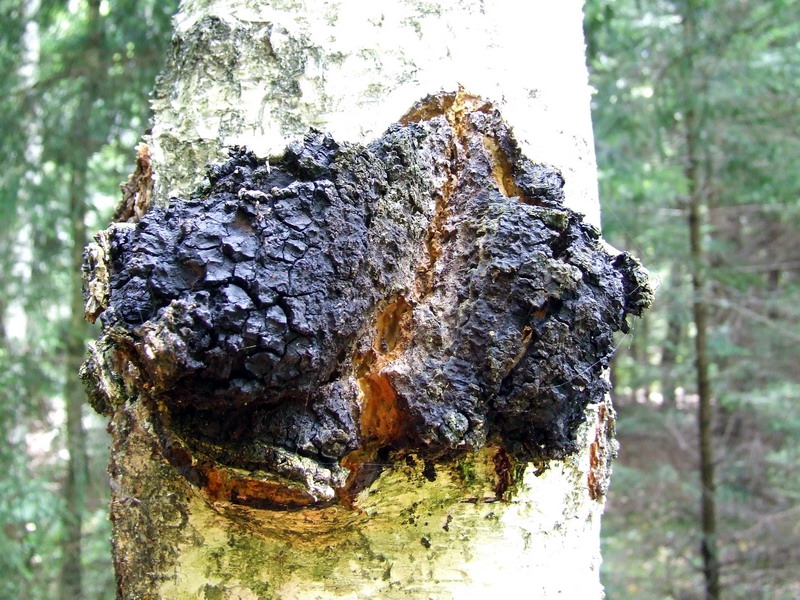
¿Qué es Chaga?
Chaga is a fungus, not a plant. What people harvest is not a mushroom cap but a sterile mass (a "conk") that bursts from the bark of infected birch trees in cold northern forests, black and cracked outside, rusty orange within. It has been brewed as a folk tea in Russia, Siberia, Scandinavia and among northern Indigenous peoples for centuries. It contains melanin pigments, polysaccharides, and compounds such as betulinic acid drawn partly from the birch.
Almost all the research on chaga is in test tubes and animals, where it shows antioxidant, anti-inflammatory and immune effects. There are essentially no good human trials. Meanwhile, chaga is very high in oxalate, and there are case reports of serious kidney damage in people who took large amounts daily for months. It is also slow-growing and heavily foraged, raising real sustainability concerns.
Beneficios y usos
Antioxidant-rich tea
Chaga extracts score very highly on lab antioxidant tests, largely thanks to melanin and polyphenols. Lab antioxidant scores do not reliably predict benefits in the body.
Immune effects in the lab
Chaga polysaccharides stimulate immune cells in cell and animal studies. Whether this translates to any benefit in people is unknown.
Anti-inflammatory potential
Animal studies suggest chaga may dampen inflammation, including in the gut. There are no reliable human trials to confirm this.
A traditional northern brew
As a mild, earthy, slightly vanilla-like tea, chaga has a long history as a coffee substitute in times of scarcity. Enjoyed occasionally, it is a pleasant woodland drink.
Cómo usarla
Occasional tea
Simmer 1–2 tsp of chaga chunks or granules in 500 ml of water for 20–60 minutes, strain and drink. Keep it occasional rather than daily, because of the oxalate content.
Extract powders
Hot-water extract powders dissolve easily into drinks. Use the lowest label dose, avoid long-term daily use, and choose reputable brands that test for contaminants.
Choose sustainable sources
Wild chaga takes many years to form and cannot be regrown on the same tree quickly. Buy from harvesters who follow sustainable practices, or avoid it altogether where it is scarce.
Foraging responsibly
If you forage, know your local rules, take only from living birches, leave part of the conk, and never harvest from fallen or dead trees.
⚠️ Precauciones
- Kidneys: chaga is very high in oxalate. There are case reports of oxalate kidney damage, including kidney failure, in people taking chaga powder daily for months. Avoid it if you have kidney disease or a history of kidney stones, and keep any use occasional.
- Blood thinners: chaga may reduce blood clotting in lab studies; avoid it with warfarin, aspirin or similar medicines, and stop at least two weeks before surgery.
- Diabetes medicines: animal studies show it can lower blood sugar, so it may add to the effect of insulin or diabetes tablets.
- Immune conditions: because it may stimulate the immune system, people with autoimmune disease or on immunosuppressants should avoid it unless their doctor agrees.
- Pregnancy and breastfeeding: avoid — there is no safety data.
- Mushroom allergy: avoid if you react to mushrooms or moulds.
Esta es información general, no consejo médico. Consulta a un profesional de la salud antes de usar Chaga para tratar una afección o junto con medicamentos.
Preguntas frecuentes
Does chaga cure cancer?
No. The claims come from lab and animal studies, not human trials. Anyone with cancer should talk to their oncology team before taking any supplement.
Is it safe to drink every day?
Occasional cups are unlikely to be a problem for most healthy people, but daily high intakes over months have been linked to kidney damage because of oxalate. Moderation matters.
Is cultivated chaga the same?
Most "cultivated" chaga is mycelium grown on grain, which is chemically different from the wild conk. It avoids sustainability problems but is not the same product.
Comentarios