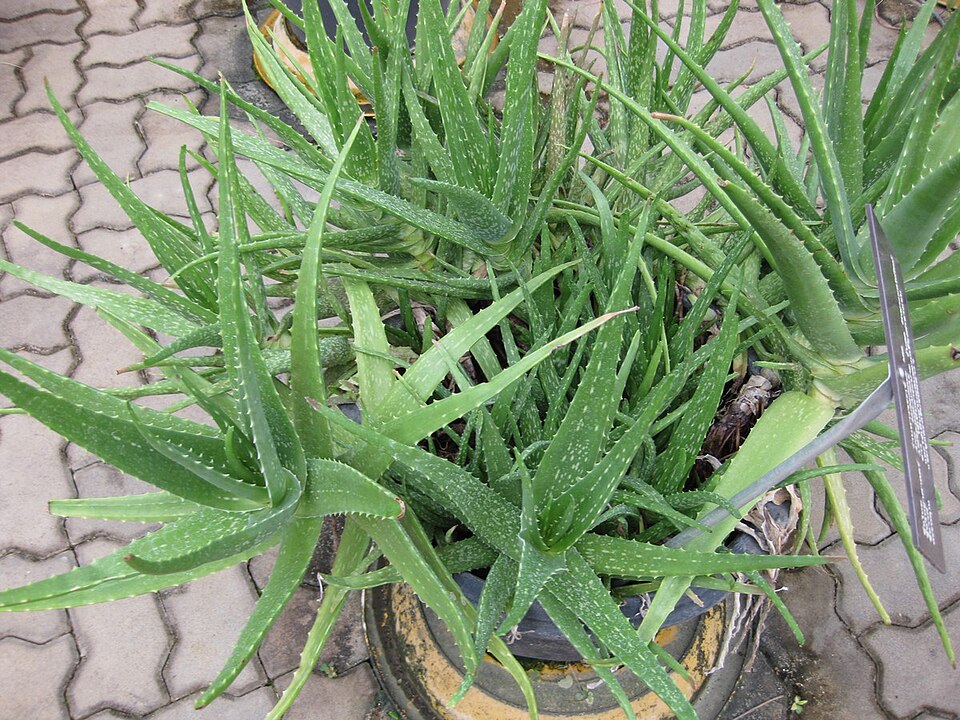
What is Aloe Vera?
Aloe vera is a thick-leaved succulent that stores a clear, cooling gel inside its leaves. Ancient Egyptian, Greek and Ayurvedic texts all mention it, and today it is one of the most widely grown medicinal plants in the world — as easy to keep on a kitchen windowsill as it is useful to have there.
Two different substances come from the leaf and they should not be confused: the inner gel, used on skin and in drinks, and the yellow latex just under the rind, a harsh laxative that modern guidance advises avoiding. Everything below refers to the gel.
Benefits & uses
Soothes minor burns and sunburn
The gel cools on contact and forms a protective, moisture-holding layer over the skin. It is a long-standing first-aid standby for small kitchen burns and sunburned shoulders.
Moisturises without greasiness
Aloe gel is mostly water bound in polysaccharides, so it hydrates skin while sinking in quickly — a common base in after-sun lotions and light moisturisers.
Calms irritated skin
Many people use it on insect bites, razor burn, and mild rashes to take the edge off itching and redness.
May support oral and digestive comfort
Aloe juice (made from purified inner gel) is used for occasional heartburn, and aloe mouthwashes are used for mouth ulcers. Choose products labelled decolorized/purified — that means the latex has been removed.
How to use it
Fresh from the leaf
Cut an outer leaf close to the base, stand it upright for 10 minutes so the yellow latex drains out, then peel the rind and scoop the clear gel. Apply directly to skin. Refrigerate leftover gel and use within a week.
Store-bought gel
Look for products listing aloe as the first ingredient (ideally 90%+ pure gel) without added alcohol, which is drying. Keep it in the fridge — cold gel feels far better on sunburn.
Aloe juice
Only drink products specifically prepared for internal use and labelled "decolorized" or "purified" (aloin removed). Follow the label; typically 30–60 ml at a time.
As a houseplant
Bright light, sandy free-draining soil, and water only when the pot is fully dry. One healthy plant supplies a household indefinitely.
⚠️ Precautions
- Never apply aloe to deep wounds, severe burns, or broken skin that needs medical care — see a doctor first.
- Whole-leaf or non-purified aloe taken by mouth acts as a strong laxative and can cause cramping and electrolyte loss; long-term use of aloe latex is unsafe.
- Skip internal use during pregnancy and breastfeeding.
- A small number of people are allergic — test the gel on your inner forearm and wait a few hours before wider use.
- Aloe taken internally may lower blood sugar; be careful if you use diabetes medication.
This is general information, not medical advice — check with a health professional before using Aloe Vera to treat a condition or alongside medication.
Frequently asked questions
Can I use the yellow liquid from the leaf?
No — that is the latex, a harsh laxative and skin irritant. Drain it off and use only the clear inner gel.
Does aloe help acne scars?
It can reduce redness and keep healing skin moisturised, which helps appearance, but it will not remove established scars.
How long does fresh gel keep?
About a week refrigerated in a sealed container. Freeze cubes of gel in an ice tray for longer storage.

Comments