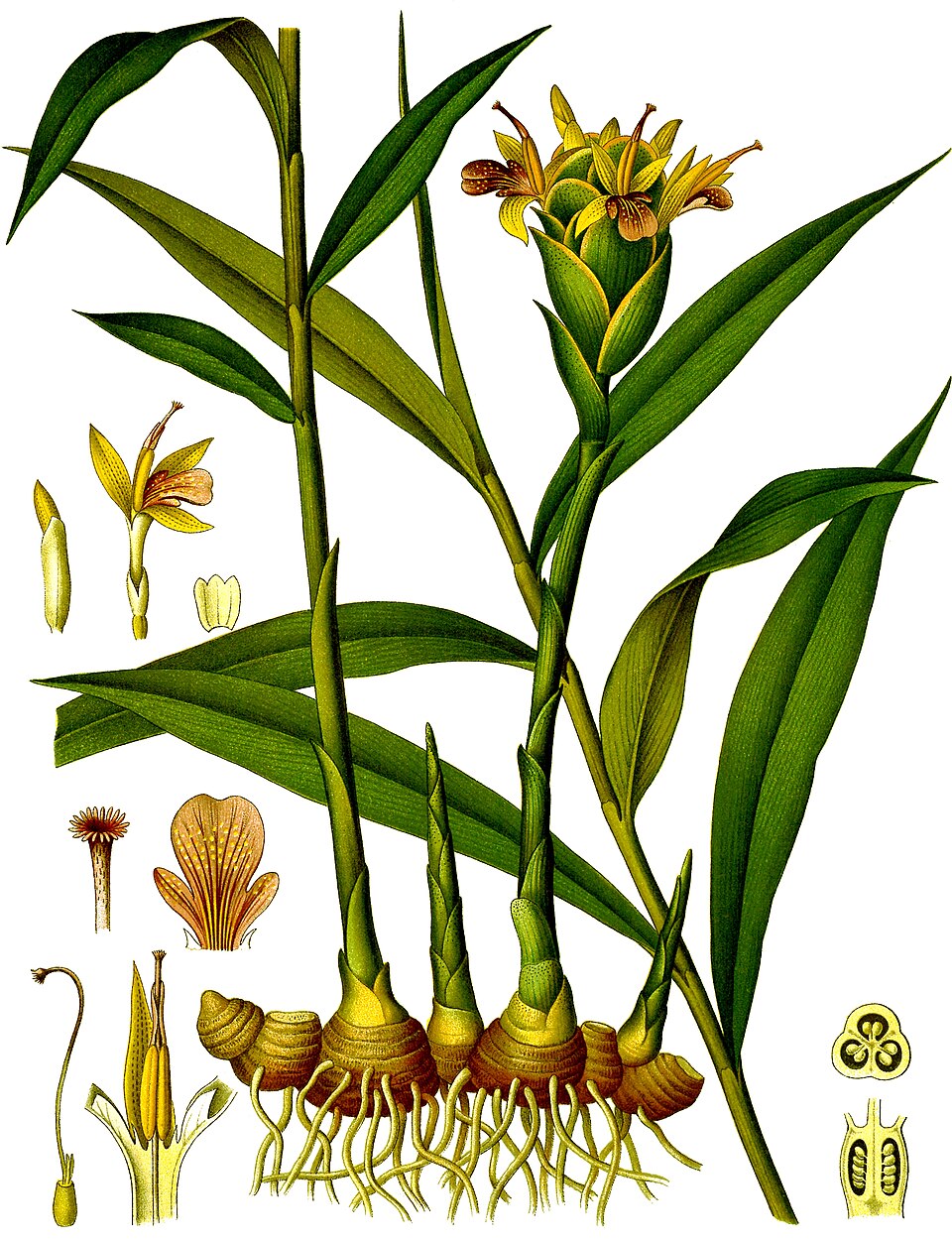
What is Ginger?
Ginger is the knobbly rhizome of a tropical flowering plant, domesticated so long ago it no longer grows wild. It moved along the spice routes from Asia into every major cuisine and pharmacopoeia — and unusually for a folk remedy, its signature use has held up well in modern research.
That use is nausea. Multiple clinical trials support ginger for morning sickness, motion sickness, and post-operative queasiness. Its pungent compounds, gingerols and shogaols, act on the digestive tract and on the same signalling pathways some anti-nausea drugs target.
Benefits & uses
Relieves nausea
The flagship benefit: roughly 1 g of ginger daily reduced nausea in pregnancy, motion sickness and post-surgery trials. It is one of the few herbs with a specific green light from midwifery guidance for morning sickness.
Aids digestion
Ginger speeds gastric emptying, which is why a cup of ginger tea after a heavy meal genuinely helps that over-full feeling.
Eases menstrual cramps
Several trials found 750–2,000 mg of ginger powder during the first days of a period reduced cramp pain, in some studies comparably to ibuprofen.
Soothes sore throats and colds
A traditional warming remedy: hot ginger tea with honey and lemon eases throat scratchiness and congestion. Fresh ginger also has mild antimicrobial activity.
May ease muscle and joint soreness
Daily ginger modestly reduced exercise-induced muscle soreness and osteoarthritis discomfort in small trials.
How to use it
Fresh tea
Slice or grate a thumb-sized piece (no need to peel if washed), simmer in 250 ml water for 10 minutes, add honey and lemon. For nausea, sip slowly; 2–3 cups a day.
In cooking
Grate into stir-fries, marinades, soups, and dressings near the end of cooking for maximum punch; add early for mellow warmth. Freeze whole root and grate from frozen — easier and keeps months.
Crystallised or pickled
Candied ginger is a portable motion-sickness option for travel; pickled ginger is the classic palate cleanser.
Capsules
For measured dosing (e.g., morning sickness), 250 mg of ginger powder four times daily was a common trial regimen — confirm suitability with your midwife or doctor first.
⚠️ Precautions
- More than ~4 g per day can cause heartburn and mouth irritation.
- Ginger mildly inhibits blood clotting: caution with anticoagulants and before surgery.
- Pregnancy: up to 1 g per day is generally considered fine for nausea, but confirm with your care provider.
- Gallstones: high doses stimulate bile flow — ask your doctor first.
This is general information, not medical advice — check with a health professional before using Ginger to treat a condition or alongside medication.
Frequently asked questions
Is dried ginger weaker than fresh?
Different, not weaker — drying converts gingerols to shogaols, which are actually more pungent gram for gram. Powder works fine in tea and for cramps; fresh tastes brighter.
Does ginger ale help nausea?
Most commercial ginger ale contains little or no real ginger and a lot of sugar. Real ginger tea or capsules work far better.
Can children take ginger?
Small culinary amounts and weak tea are fine for most kids; ask a paediatrician before using it as a remedy.


Comments