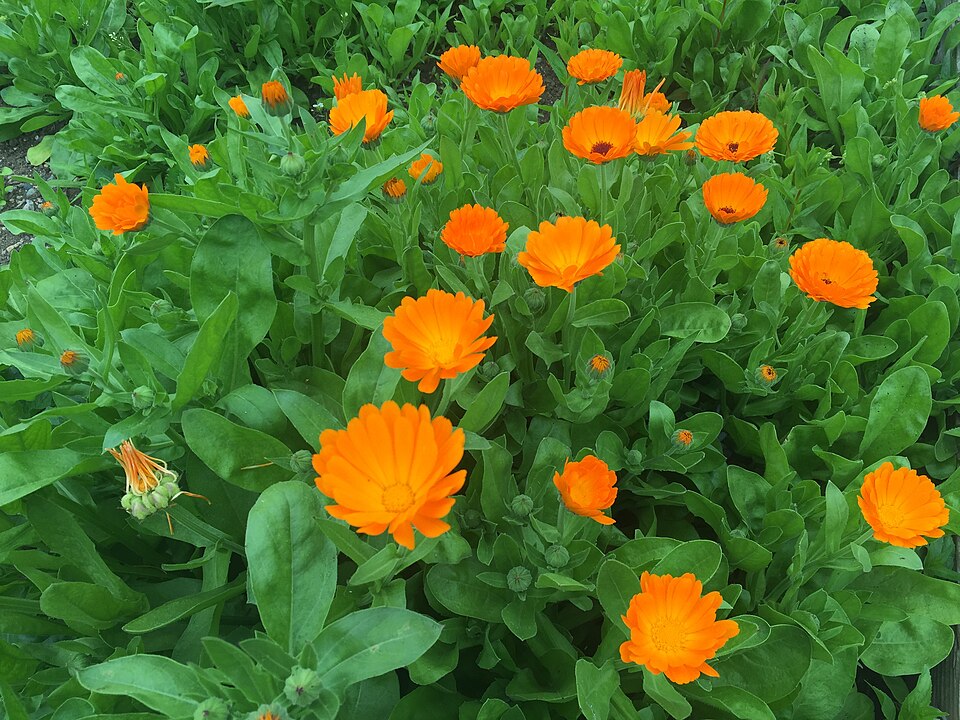
What is Calendula?
Calendula, or pot marigold, is an easy-going annual with bright orange and yellow daisy-like flowers that bloom almost all year in mild climates — its name comes from the Latin calendae, the first day of the month. Medieval cooks threw the petals into soups and stews ("pot" marigold) and used them to colour butter and cheese. Its flowers contain triterpenoids, flavonoids and carotenoids, which give them their colour and much of their soothing effect on skin.
Calendula is mostly used on the skin. Lab and animal studies show it supports wound healing and calms inflammation, and small human trials suggest benefits for minor wounds, nappy rash and some skin irritations. Results for radiation-related skin reactions are mixed. Evidence for taking it by mouth is very limited.
Benefits & uses
Minor cuts, scrapes and grazes
Calendula ointments and creams are a traditional first-aid staple. Animal and small human studies suggest they help new tissue form and reduce inflammation; the evidence is encouraging but not strong.
Nappy rash and dry, irritated skin
Small trials found calendula ointment helped nappy rash, and it is widely used in gentle baby-care products. It is a mild, pleasant option for chapped or rough skin.
Skin during radiotherapy (mixed results)
One well-known trial found calendula cream reduced radiation skin reactions compared with a standard cream, but later studies were less convincing. Only use it during cancer treatment if your care team agrees.
Leg ulcers and slow wounds
Small studies suggest calendula may speed healing of venous leg ulcers. Chronic wounds need medical care; calendula can only be an add-on with your nurse's or doctor's approval.
Mouth and gum rinse
Used traditionally as a mouthwash for sore gums and mouth ulcers. A few small studies suggest it may reduce gum inflammation and plaque.
How to use it
Ointment or cream
Apply a thin layer of a 2–10% calendula ointment or cream to clean minor wounds, scrapes, chapped skin or nappy rash two to four times a day. Don't use on deep, dirty or infected wounds — see a doctor.
Infused oil
Half-fill a clean jar with dried flowers, cover completely with olive or sunflower oil, and leave in a warm spot for 4–6 weeks, shaking now and then. Strain well. Use as a massage oil or melt with beeswax to make a simple salve.
Tea or wash
1–2 tsp dried flowers per cup of boiling water, covered, 10 minutes. Once cooled, use as a skin wash, compress or mouth rinse. Drinking it is traditional but little studied.
In the kitchen
Fresh petals are edible, with a mild, slightly peppery taste. Scatter them over salads, or use them to colour rice and butter — historically "poor man's saffron".
Grow it
Sow directly in spring in any sunny spot; it flowers for months and attracts pollinators. Pick flowers regularly to keep them coming.
⚠️ Precautions
- Avoid if you are allergic to the daisy family (ragweed, chrysanthemums, chamomile, daisies); skin reactions are possible. Patch-test a small area first, especially on sensitive skin.
- Pregnancy and breastfeeding: avoid taking calendula by mouth, as it was traditionally used to bring on periods and may affect the womb. Brief use of creams on the skin is generally considered low risk, but check with your midwife.
- Taken by mouth in large amounts, it may add to the effect of sedatives and sleep medicines; check with your pharmacist if you take these. Stop oral use two weeks before surgery.
- Don't confuse pot marigold (Calendula) with French and African marigolds (Tagetes), which are different plants and are not used the same way.
- Calendula is not a treatment for infected wounds, burns larger than a coin, or wounds that are deep, dirty or not healing — these need medical attention. Toxicity from normal topical or culinary use is not known.
This is general information, not medical advice — check with a health professional before using Calendula to treat a condition or alongside medication.
Frequently asked questions
Is calendula the same as marigold?
It is the "pot marigold". The common bedding marigolds sold in garden centres are usually Tagetes, a different genus with different uses.
Is it safe for babies?
Calendula creams are widely used for nappy rash and are generally well tolerated. Check for any redness after first use, and avoid if your family has daisy-family allergies.
Can I put calendula on eczema?
Many people with mild dry skin find it soothing, but eczema-prone skin is often sensitive to plant extracts. Patch-test first, and stop if it stings or reddens.
Comments