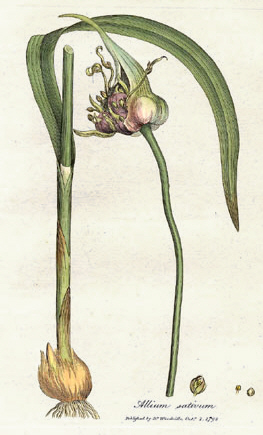
What is Garlic?
Garlic has been food and medicine for at least 5,000 years — Egyptian pyramid workers received rations of it, and nearly every traditional medical system prescribes it. Crushing a clove triggers an enzymatic reaction that creates allicin, the pungent sulfur compound behind both the aroma and most of the bioactivity.
Among culinary herbs, garlic has some of the strongest cardiovascular evidence: meta-analyses of randomised trials show aged garlic extract and garlic powder modestly lower blood pressure in hypertensive people (comparable to some single drugs in a few trials) and trim total and LDL cholesterol.
Benefits & uses
Lowers blood pressure
The best-supported effect: pooled trials show reductions around 8–10 mmHg systolic in people with hypertension using aged garlic extract or standardised powder — meaningful, if not a substitute for prescribed treatment.
Improves cholesterol modestly
Two-to-three months of garlic supplementation lowers total cholesterol roughly 10–15 mg/dL in those with elevated levels.
Traditional immune ally
One well-known trial found fewer and shorter colds in daily allicin-supplement users; evidence is thin but tradition is vast, and raw garlic is genuinely antimicrobial in the lab.
Antioxidant and vessel support
Sulfur compounds boost the body's own antioxidant enzymes and improve endothelial (vessel-lining) function in studies.
Flavour that replaces salt
The quiet cardiovascular benefit: food this flavourful needs less sodium.
How to use it
Crush, then wait
The one technique worth memorising: crush or chop garlic and let it sit 10 minutes before heat. Allicin forms in that window; cooking immediately after crushing destroys the enzyme before it acts.
Eat it daily
The traditional "dose" is 1–2 fresh cloves a day, raw or lightly cooked — through dressings, salsas, hummus, or stirred into dishes at the end of cooking.
Aged garlic extract
The best-studied supplement form (odourless, gentler on the stomach): trials typically used 600–1,200 mg daily for blood pressure.
Roasted
Whole roasted heads turn sweet and mild — less allicin than raw, but garlic you'll actually eat daily beats potent garlic you won't.
⚠️ Precautions
- Garlic inhibits platelet clumping: high intakes and supplements add to anticoagulant/antiplatelet drugs, and should stop 7–10 days before surgery.
- It can reduce the effectiveness of some drugs (notably the HIV medication saquinavir) — check interactions if on critical medication.
- Raw garlic can cause heartburn and, held against skin, actual burns — don't tape cloves to skin, an unfortunately persistent folk remedy.
- Culinary amounts are fine in pregnancy; supplement doses lack good data.
- Yes, it affects body odour — aged extract sidesteps this.
This is general information, not medical advice — check with a health professional before using Garlic to treat a condition or alongside medication.
Frequently asked questions
Raw or cooked for health benefits?
Raw (crushed, rested) preserves the most allicin; gentle cooking after the 10-minute rest keeps much of it. Long boiling loses most activity — add garlic late.
Do odourless supplements work?
Aged garlic extract is actually the best-evidenced supplement form for blood pressure, so yes — odourless doesn't mean inactive.
How do I get garlic smell off my hands?
Rub them on stainless steel (a spoon, the sink) under cold water — the sulfur compounds bind to the metal.

Comments