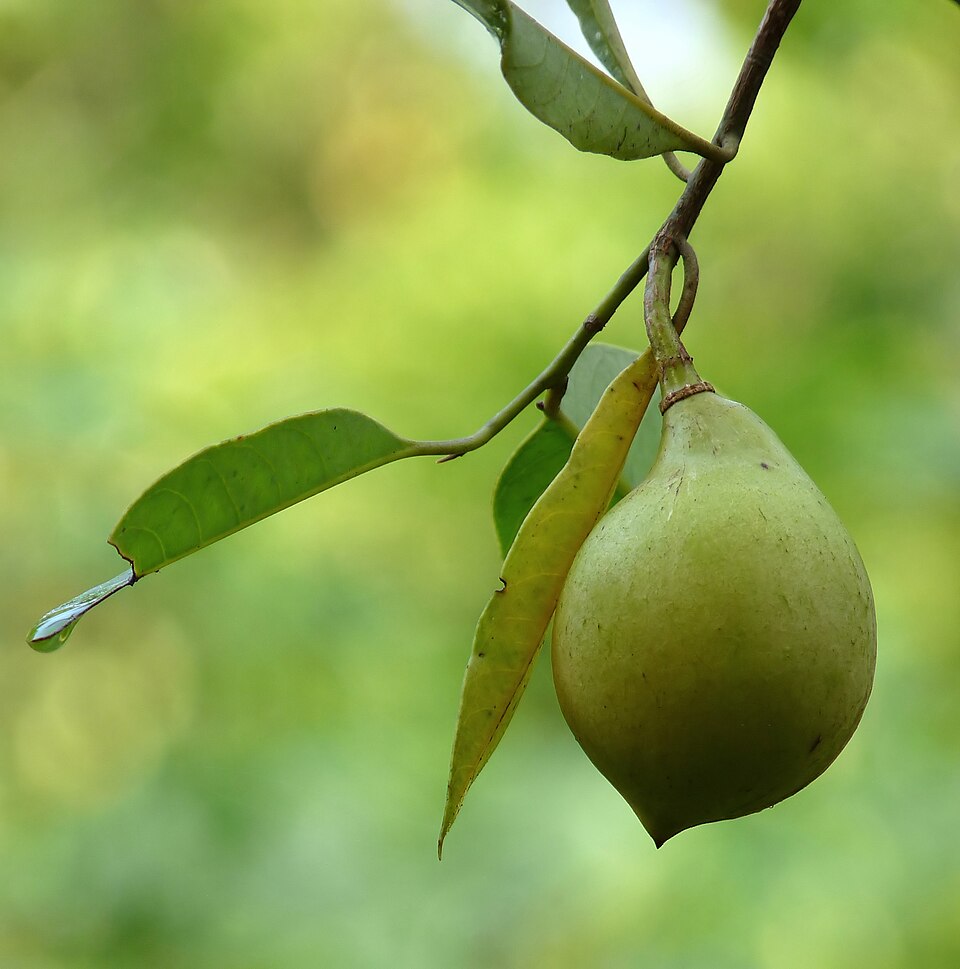
What is Nutmeg?
Nutmeg is the seed of an evergreen tree native to the Banda Islands of Indonesia; mace is the lacy red covering around the same seed. In the 1600s nutmeg was so valuable that the Dutch and English fought over the tiny islands that grew it. Its warm, sweet aroma comes from volatile oils including myristicin, elemicin and safrole.
Traditionally nutmeg was used for indigestion, diarrhoea and as a sleep aid (a grating in warm milk). Human evidence for these uses is thin; most support comes from lab and animal studies. What is well documented is its toxicity: the same compounds that give it flavour cause poisoning, with nausea and hallucinations, when a couple of teaspoons or more are eaten at once.
Benefits & uses
Settles the stomach (tradition)
Nutmeg has long been used in Ayurvedic, Arabic and European traditions for gas, indigestion and loose stools. Animal studies support antidiarrhoeal effects, but human trials are lacking.
Bedtime tradition
A pinch in warm milk is a folk remedy for sleep. Animal studies show some sedative effects, yet no good human trials — and higher "medicinal" amounts are exactly where toxicity starts.
Antimicrobial in the lab
Nutmeg extracts inhibit several bacteria and fungi in test tubes, including some that cause bad breath. This fits its use in old preserving recipes but is not proof of benefit in the body.
Flavour without sugar
A practical kitchen benefit: nutmeg makes custards, porridge, vegetables and sauces taste sweeter and richer, so you can use less sugar or salt.
How to use it
Grate it fresh
Buy whole nutmegs and grate with a fine rasp just before using. Whole nutmegs keep their aroma for years; ground nutmeg fades within months.
Savoury dishes
A small grating (about 1/8 tsp) lifts béchamel, mashed potatoes, spinach, squash and meat sauces — it is the secret in many classic white sauces.
Sweet dishes and drinks
Use 1/4–1/2 tsp in a whole cake, pie or batch of biscuits, or a pinch on eggnog, rice pudding or custard. Spread over several servings, that is a safe amount.
Mace
Mace tastes like a lighter, more delicate nutmeg and carries the same compounds. Use it in similar small amounts in pickles, sauces and baking.
⚠️ Precautions
- Toxic in large amounts: eating around two teaspoons (roughly 5 g) or more at once can cause nutmeg poisoning — nausea, racing heart, dizziness, dry mouth, anxiety, confusion and hallucinations, starting several hours later and lasting up to a day or two. Seek medical help if this happens. Larger amounts can be dangerous.
- Cooking amounts (a pinch or grating spread across a dish) are safe for almost everyone. The risk comes from deliberate large doses or accidental spoonfuls.
- Keep whole nutmegs and jars out of reach of children, who are more sensitive; call a poison centre if a child swallows more than a small pinch.
- Pregnancy: normal culinary use is fine, but avoid large or "medicinal" amounts — high doses have been linked to miscarriage risk and myristicin may affect the baby. Breastfeeding: stick to kitchen amounts.
- Medications: nutmeg compounds may add to sedatives and could interact with drugs processed by the liver; avoid anything beyond culinary use if you take sedatives, antidepressants or other psychiatric medication.
- Nutmeg essential oil is highly concentrated and should never be swallowed; keep it away from children and pets.
This is general information, not medical advice — check with a health professional before using Nutmeg to treat a condition or alongside medication.
Frequently asked questions
Is nutmeg a nut? Can people with nut allergies eat it?
It is a seed, not a tree nut, and most people with nut allergies tolerate it. Reactions to nutmeg itself are possible but uncommon — ask your allergist if unsure.
How much nutmeg is too much?
Problems are generally reported from about two teaspoons (roughly 5 g) of ground nutmeg taken at once, with more severe effects at higher amounts. A normal recipe uses a fraction of that spread over several servings.
Is nutmeg toxic to pets?
Yes — dogs and cats can be poisoned by nutmeg, so keep nutmeg-heavy foods (like eggnog or spiced baking) away from them.
Comments