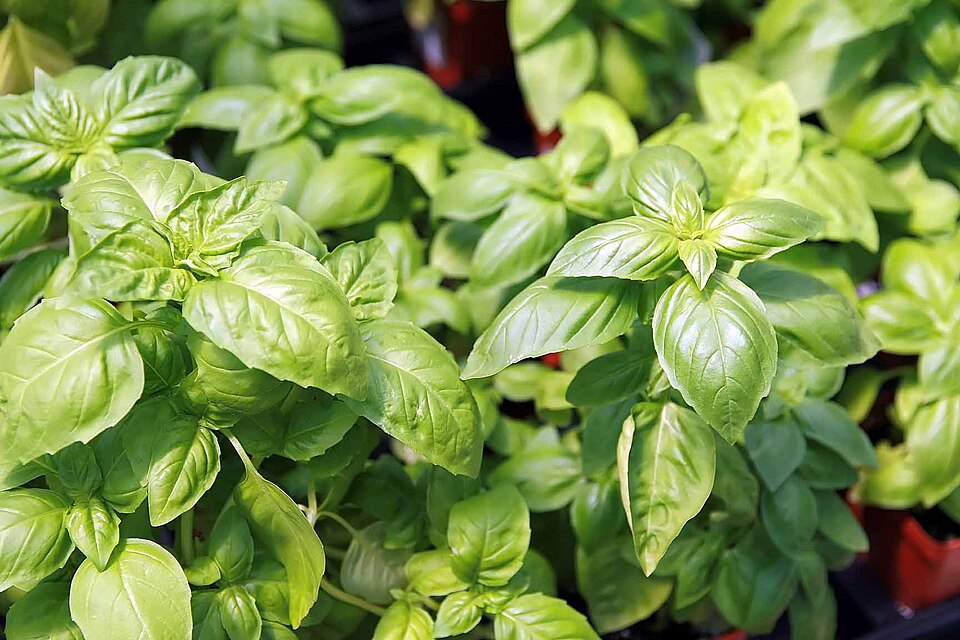
What is Basil?
Sweet basil is a tender mint-family herb native to tropical Asia and Africa, grown in India since ancient times before it reached the Mediterranean and became the soul of Italian pesto and Provençal pistou. Its aroma comes from volatile oils — mainly linalool, eugenol and, in some varieties, estragole — plus antioxidant polyphenols such as rosmarinic acid. Thai basil, lemon basil and holy basil (tulsi, a different species) are relatives with their own flavours and uses.
Basil is first and foremost a kitchen herb. It supplies vitamin K and a range of antioxidant compounds, and its extracts show antimicrobial and anti-inflammatory activity in the lab, but good human trials of culinary basil for any health outcome are essentially absent. Enjoy it for flavour; any health bonus is a pleasant side effect of eating more vegetable-rich food.
Benefits & uses
Makes simple food taste wonderful
A handful of fresh basil turns tomatoes, courgettes, beans or plain pasta into something special, which makes vegetable-heavy and lower-salt cooking easier to enjoy. That is its most reliable benefit.
A source of vitamin K and polyphenols
Basil is rich in vitamin K and contains antioxidant compounds such as rosmarinic acid and flavonoids. A generous portion of pesto contributes meaningfully to vitamin K intake; a sprinkle of leaves much less so.
Traditional digestive herb
Like many aromatic mint-family herbs, basil has long been used for wind, bloating and poor appetite. This is traditional use; human trials are lacking.
Antimicrobial compounds in the lab
Basil oil and its components inhibit a range of bacteria and fungi in test tubes, which has interested food-preservation researchers. That says nothing yet about treating infections in people.
How to use it
Fresh, at the end
Tear or slice leaves just before serving and add them off the heat — basil's aroma fades within minutes of cooking. Scatter over tomatoes, pizza, soups, curries and salads.
Pesto
Pound or blitz 2 large handfuls of leaves with 1 small garlic clove, a small handful of pine nuts, a good grating of hard cheese, a pinch of salt and enough olive oil to loosen. Use within a few days, or freeze in small portions.
Storing
Keep a bunch like cut flowers, stems in a glass of water on the kitchen counter, loosely covered. The fridge turns basil leaves black because they are damaged by cold.
Freezing
Chop leaves and freeze them in ice-cube trays topped with olive oil, then drop a cube into sauces and soups in winter. Dried basil tastes quite different — more hay than summer.
Grow it
Easy from seed on a sunny windowsill or in a warm spot outdoors. Pinch out the tips regularly and remove flower buds to keep the plant bushy and leafy.
⚠️ Precautions
- Culinary amounts are considered safe for almost everyone, including in pregnancy and breastfeeding. Avoid concentrated basil extracts and basil essential oil in pregnancy — safety data is lacking.
- Basil is high in vitamin K. If you take warfarin, you do not need to avoid it, but keep your intake consistent — a sudden switch to eating pesto daily can affect your INR.
- Basil contains estragole, which caused cancer in rodents at very high doses. Normal kitchen use is not considered a concern, but basil essential oil should not be swallowed, and it should be kept away from children and pets.
- Allergy is uncommon but possible, especially in people sensitive to other mint-family herbs such as oregano, thyme or sage.
This is general information, not medical advice — check with a health professional before using Basil to treat a condition or alongside medication.
Frequently asked questions
Is basil the same as holy basil (tulsi)?
No. Holy basil is Ocimum tenuiflorum, a related species with a spicier, clove-like flavour, used in Thai cooking and as an Ayurvedic tea. Its research and uses are different from sweet basil's.
Why does my basil turn black?
Cold and bruising. Keep it out of the fridge, cut it with a sharp knife or tear it gently, and add it at the last moment. A little lemon juice or oil also slows browning in pesto.
Should I worry about estragole in basil?
Not at culinary levels. The concern comes from high-dose animal studies of the isolated compound; European regulators advise limiting concentrated sources such as essential oils, not fresh leaves in your salad.
Comments