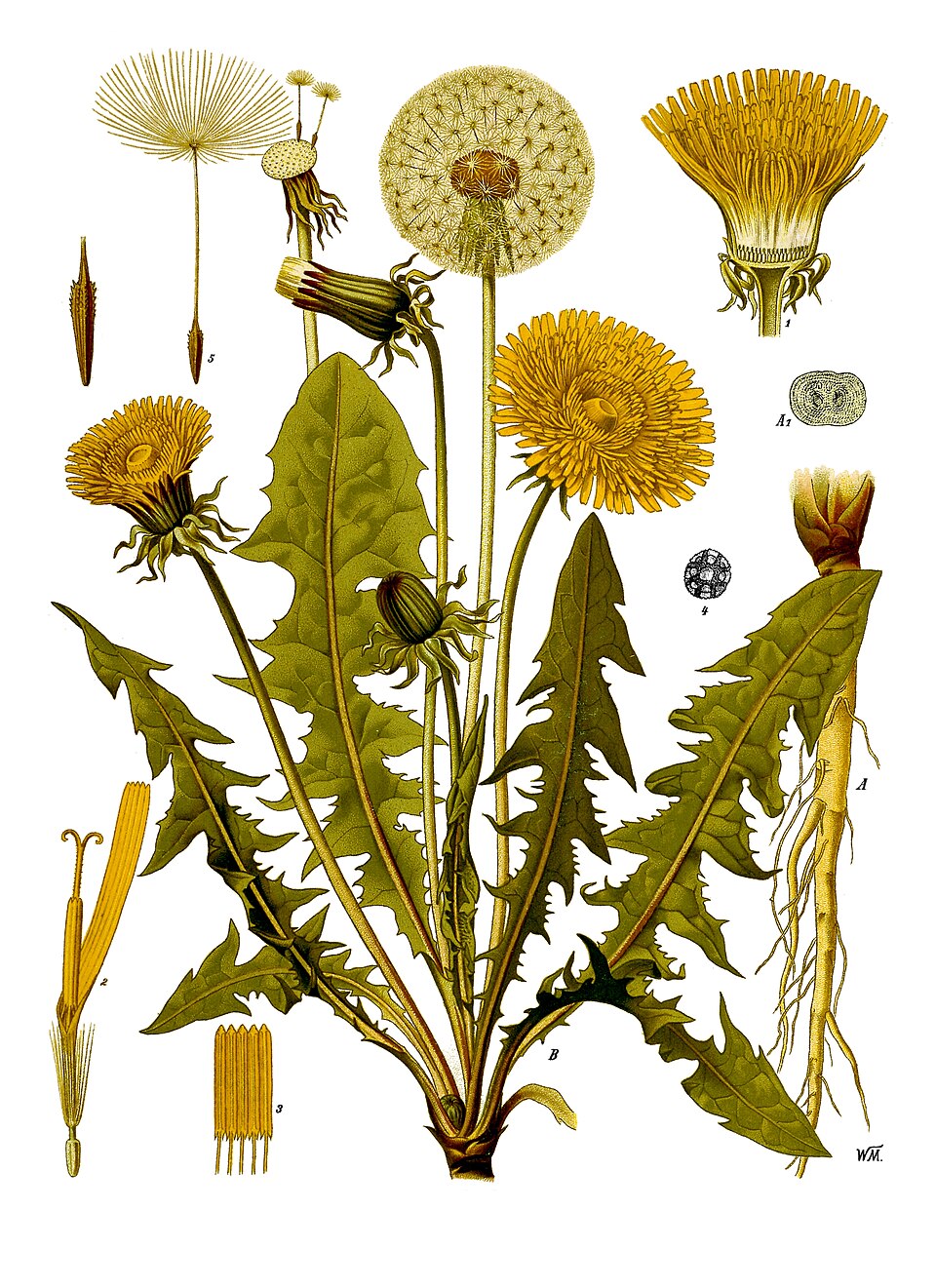
What is Dandelion?
Dandelion is the most persecuted food plant on earth. Every part is edible — bitter leaves rich in vitamins A and K and minerals, roots that roast into a coffee-like brew, flowers for fritters and wine — and European, Arabic and Chinese medicine all used it for liver and digestive complaints centuries before it became a lawn enemy.
Scientifically it's a classic bitter: bitterness on the tongue triggers reflex secretion of saliva, stomach acid and bile, which is the honest mechanism behind most of its digestive reputation. The leaf is also a mild, potassium-sparing-ish diuretic (it supplies its own potassium), supported by one small human study and much tradition; big claims beyond that (detox cures, cancer) outrun the evidence.
Benefits & uses
Wakes up sluggish digestion
Bitter leaf or root before meals stimulates appetite, stomach acid and bile flow — traditional herbalism's standard opener for bloating and fat-heavy-meal discomfort.
Gentle fluid balance support
The leaf increased urination frequency in a small human pilot; unusually for a diuretic, dandelion is itself rich in potassium.
Nutrient-dense wild food
Young leaves out-score lettuce comfortably on vitamins A, C, K, calcium and iron; the root supplies inulin, a prebiotic fibre.
Liver tradition
Root preparations are a mainstay of European "liver and gallbladder" teas; animal and cell data support mild protective effects, human trials are lacking — classic "traditional, plausible, unproven".
Free and everywhere
The most accessible medicinal plant there is — provided you pick from unsprayed, un-trafficked ground.
How to use it
Salad greens
Pick young spring leaves (before flowering; older ones get fierce), wash well, dress with something fatty and acidic — the classic French pissenlit salad with warm bacon dressing exists for a reason.
Root "coffee"
Scrub, chop and roast roots at 180 °C until deep brown, then simmer 1–2 tsp per cup for 10 minutes. Toasty, bitter, caffeine-free.
Digestive tea
1–2 tsp dried root (or leaf) per cup, simmered 5–10 minutes; drink 15–30 minutes before meals for the bitter effect — don't sweeten it into pointlessness.
Tincture
Root tincture 2–3 ml before meals as a compact bitter when tea isn't practical.
⚠️ Precautions
- Gallstones or bile duct obstruction: bile-stimulating herbs can trigger pain — medical advice first.
- Daisy-family allergy applies; latex in stems can irritate sensitive skin.
- The diuretic effect can add to diuretic medication and lithium — check with your doctor.
- Forage smart: avoid roadsides, dog runs and sprayed lawns.
- Contact dermatitis from handling is rare but real for latex-sensitive people.
This is general information, not medical advice — check with a health professional before using Dandelion to treat a condition or alongside medication.
Frequently asked questions
Is dandelion "detox" real?
The honest version: it stimulates bile and urination, which is what "detox" claims usually dress up. Your liver detoxifies fine on its own; dandelion is a pleasant digestive bitter, not a cleanse.
Are the flowers useful?
Culinary, yes — fritters, syrup, wine. Medicinally they're the least-used part.
How bitter is too bitter?
If leaves are unpalatably harsh, they're past their window — but remember the bitterness IS the digestive mechanism. Blanching (covering the plant to pale the leaves) tames it.
Comments