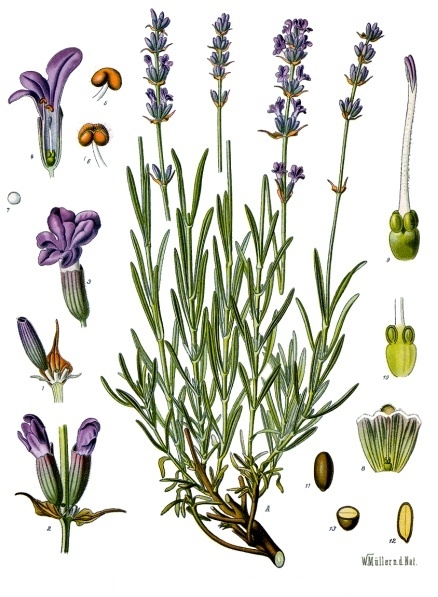
What is Lavender?
English lavender is a fragrant Mediterranean shrub whose name likely comes from the Latin lavare, "to wash" — Romans scented their baths with it. The essential oil, dominated by linalool and linalyl acetate, is one of the most studied scents in aromatherapy, and unusually, lavender has also been trialled as an oral capsule.
The evidence is better than most aromatherapy: a standardised oral lavender-oil preparation (marketed in Europe as Silexan) reduced generalised anxiety symptoms in several randomised trials, and inhaled lavender consistently shows small improvements in sleep quality and pre-procedure anxiety.
Benefits & uses
Reduces anxiety
The standout: oral lavender-oil capsules performed comparably to low-dose lorazepam and paroxetine in some generalised-anxiety trials, without sedation or dependence. Inhaled lavender also lowers situational anxiety (dentist's waiting rooms are a favourite study setting).
Improves sleep quality
Lavender scent at bedtime modestly deepened sleep in studies of students, new mothers and ICU patients alike. Cheap, pleasant, low-risk.
Calms irritated skin and scalp
Diluted lavender oil is used for minor burns, insect bites and itchy scalp; it has mild antiseptic and anti-inflammatory action.
Eases tension headaches
Inhaling lavender oil for 15 minutes reduced migraine severity versus placebo in a small trial; many find the scent generally head-clearing.
Keeps moths from wardrobes
The classic sachet use — the same volatile oils insects dislike are the ones humans pay for.
How to use it
Pillow / diffuser
2–4 drops of essential oil on a tissue near the pillow, or in a diffuser 30 minutes before bed. For travel anxiety, a drop on a handkerchief to sniff works anywhere.
Bath
5–8 drops of oil mixed into a tablespoon of carrier oil or full-fat milk (oil doesn't disperse in plain water), added to a warm evening bath.
Tea
1–2 tsp dried culinary-grade lavender buds per cup, steeped 5 minutes. Floral and slightly bitter; blends well with chamomile and honey.
Topical
Dilute to 1–3% in a carrier oil (roughly 1–2 drops per teaspoon) for temples, insect bites or minor irritation.
Oral capsules
Standardised 80 mg lavender-oil capsules are sold OTC in many countries for anxiety — take as labelled; expect mild lavender-flavoured burps.
⚠️ Precautions
- Essential oil is for external use unless in a purpose-made capsule — swallowing free oil can cause significant toxicity.
- Always dilute on skin; neat application sensitises some people.
- Keep essential oils away from children and pets (cats are especially sensitive).
- Prepubertal children: a handful of case reports linked heavy topical lavender/tea-tree use to temporary breast tissue growth in boys; occasional diffusion is fine, routine skin application less advisable.
- It adds to the drowsiness of sedatives and alcohol.
This is general information, not medical advice — check with a health professional before using Lavender to treat a condition or alongside medication.
Frequently asked questions
Which lavender species should I buy?
Lavandula angustifolia ("English" or "true" lavender) for calming uses. Lavandin (L. × intermedia) is cheaper and more camphorous — fine for cleaning and moth sachets, harsher for relaxation.
Does the scent really do anything, or is it placebo?
Linalool measurably acts on the nervous system in animal and human studies. Expect a genuine but gentle effect — the trials show real, modest benefits.
Can I cook with it?
Yes, sparingly — culinary-grade buds in shortbread, honey or lemonade. A little goes a very long way; too much tastes like soap.
Comments